

• Address: Villianur, Puducherry-605110, India
  • Email: sales@napcen.com
  • Leading Industrial Air Pollution Control Equipment Manufacturer in India
    INDUSTRIAL AIR POLLUTION CONTROL EQUIPMENT

    Leading Industrial Air Pollution Control Equipment Manufacturer in India

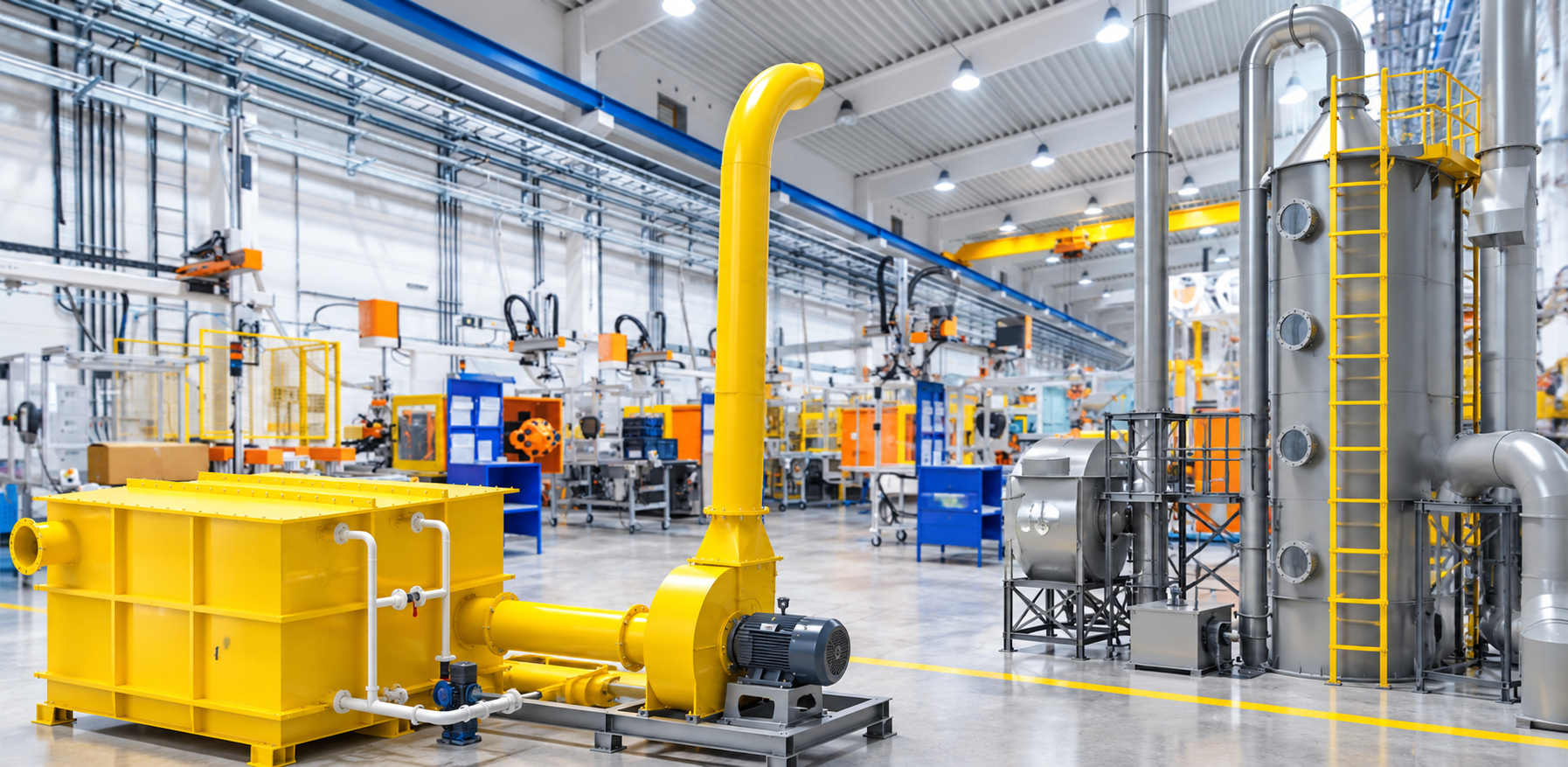
    NAPCEN specializes in designing, manufacturing, and supplying industrial air pollution control systems, including wet scrubbers, dry scrubbers, dust collectors, fume extractors, and downdraft tables. Delivering customized pollution control solutions for industries across India and global markets.
  • Industrial Wet Scrubber Manufacturer & Supplier in India
    WET SCRUBBER SYSTEMS

    Industrial Wet Scrubber Manufacturer & Supplier in India

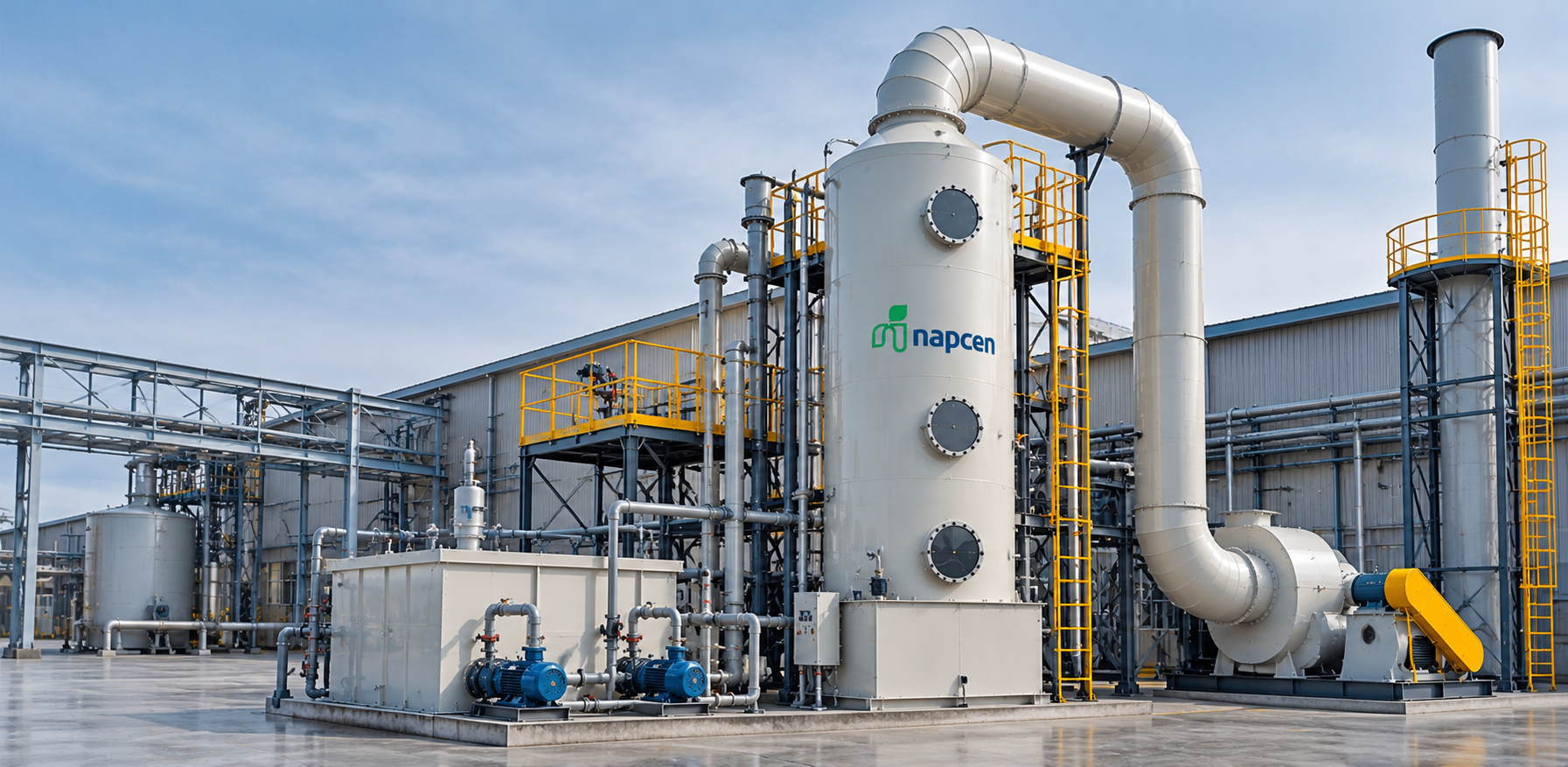
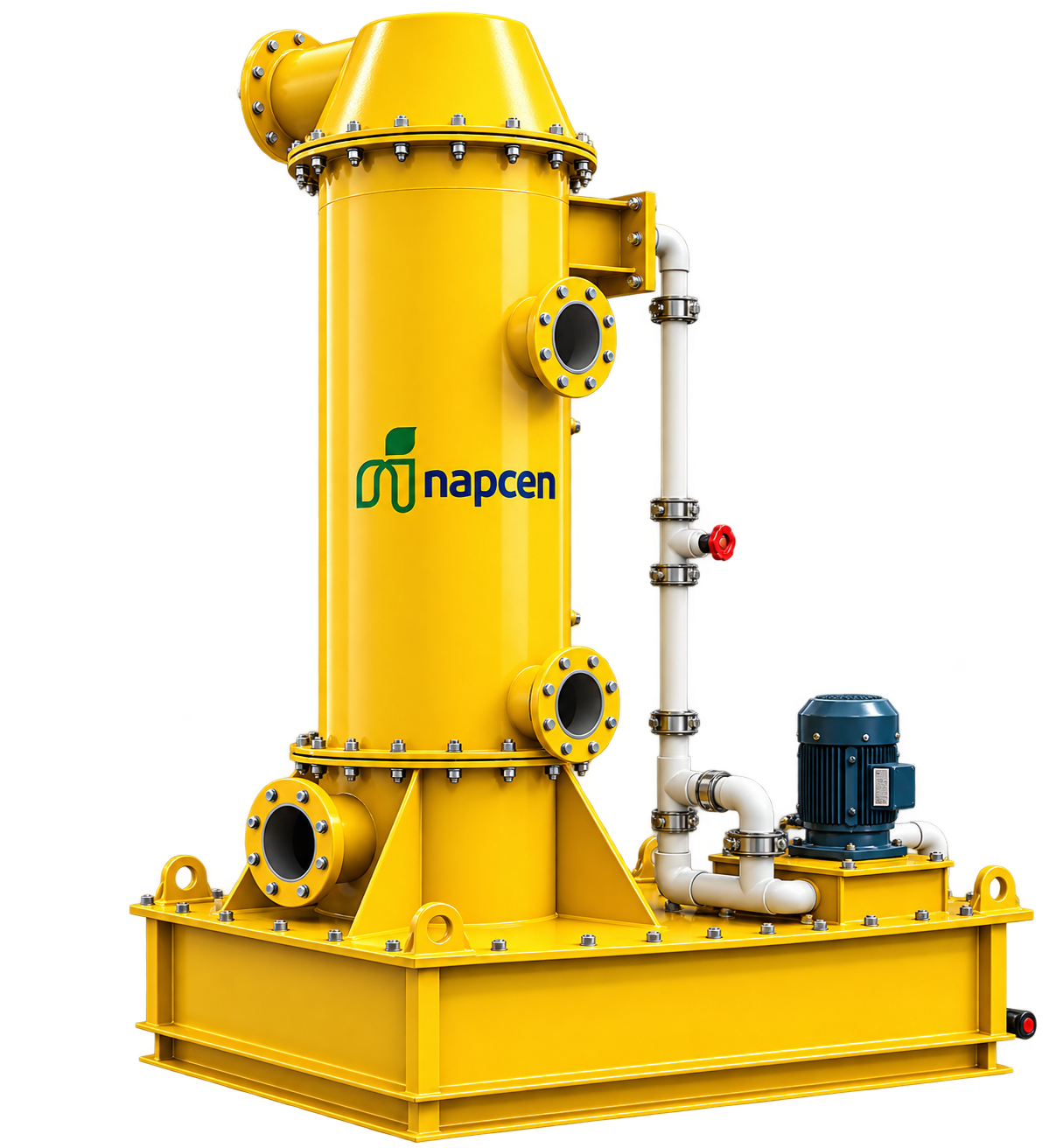
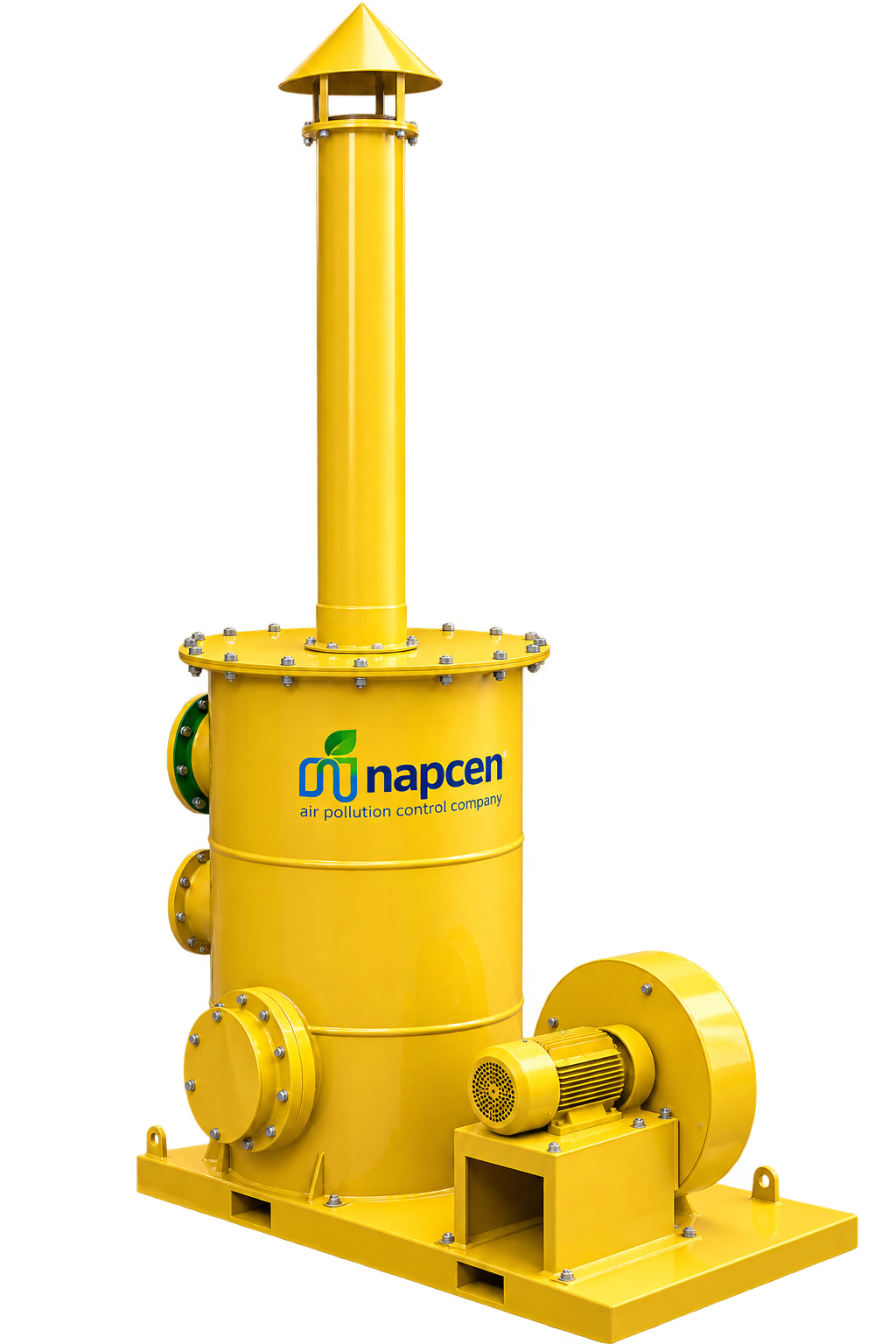
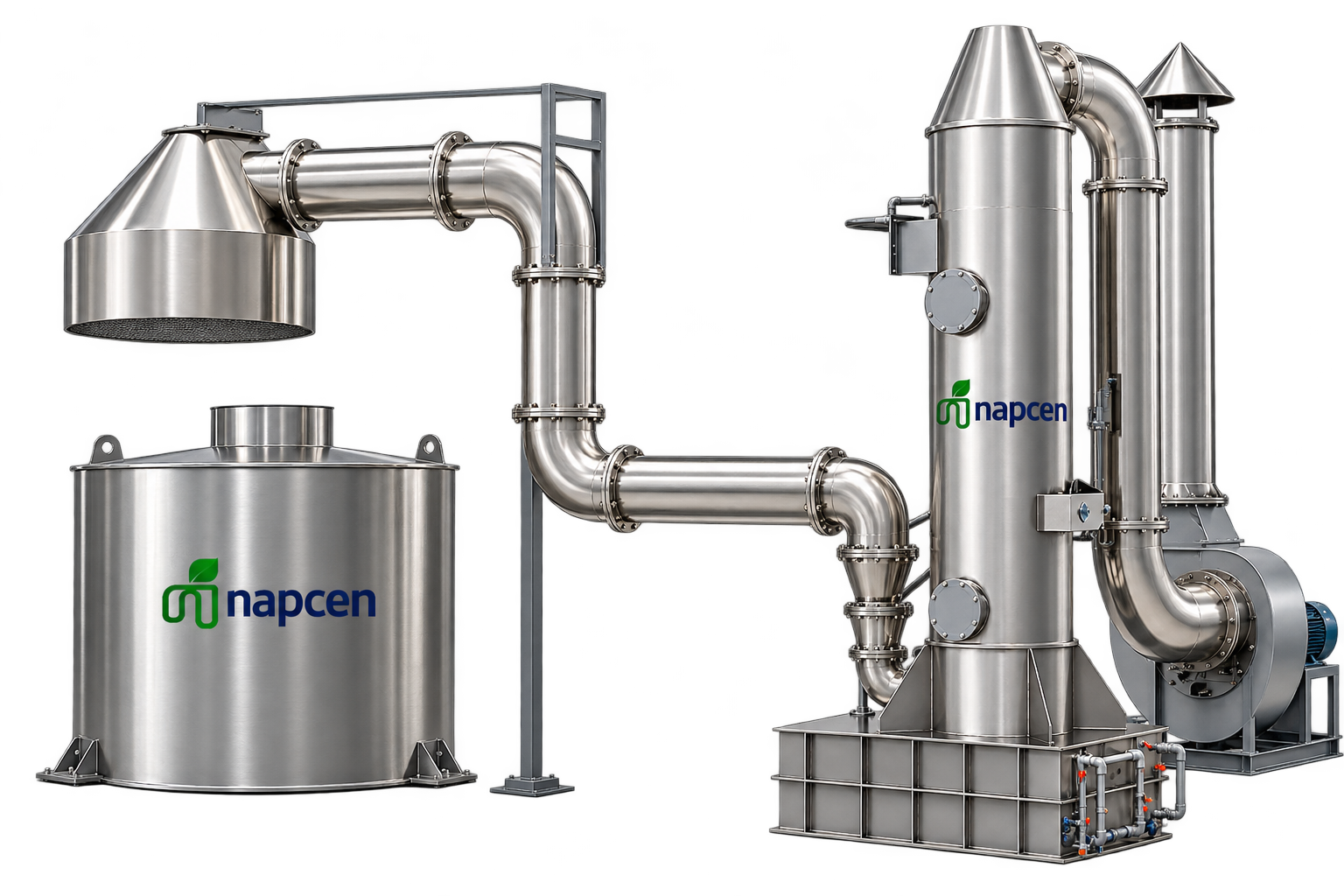
    NAPCEN manufactures high-performance wet scrubber systems for industrial gas treatment, acid fumes, chemical vapors, ammonia, chlorine, and other gaseous pollutants. Explore our packed bed scrubbers, venturi scrubbers, spray towers, and customized wet scrubbing solutions.
  • Industrial Dust Collector Manufacturer for Cleaner & Safer Workplaces
    INDUSTRIAL DUST COLLECTION

    Industrial Dust Collector Manufacturer for Cleaner & Safer Workplaces

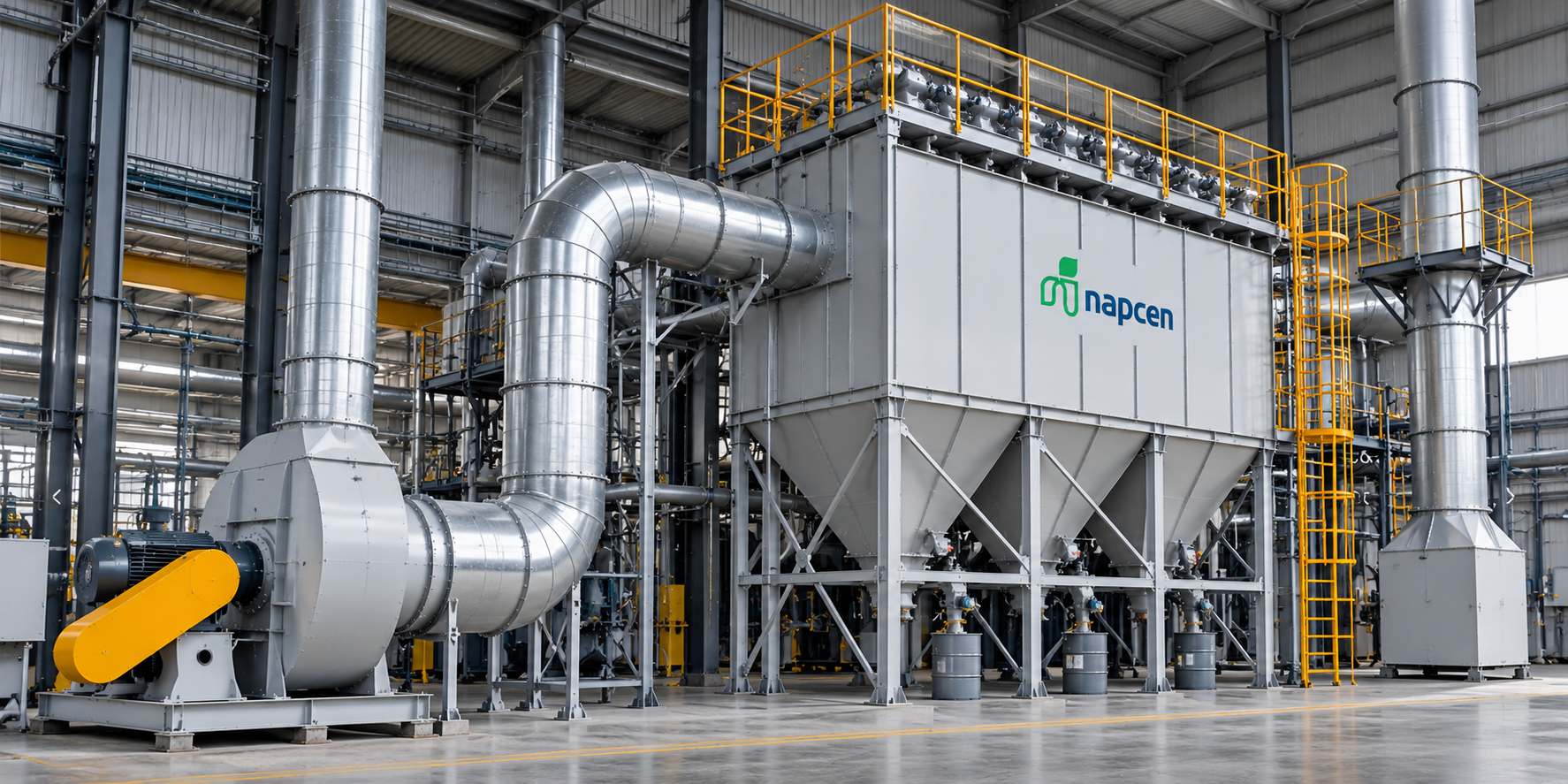
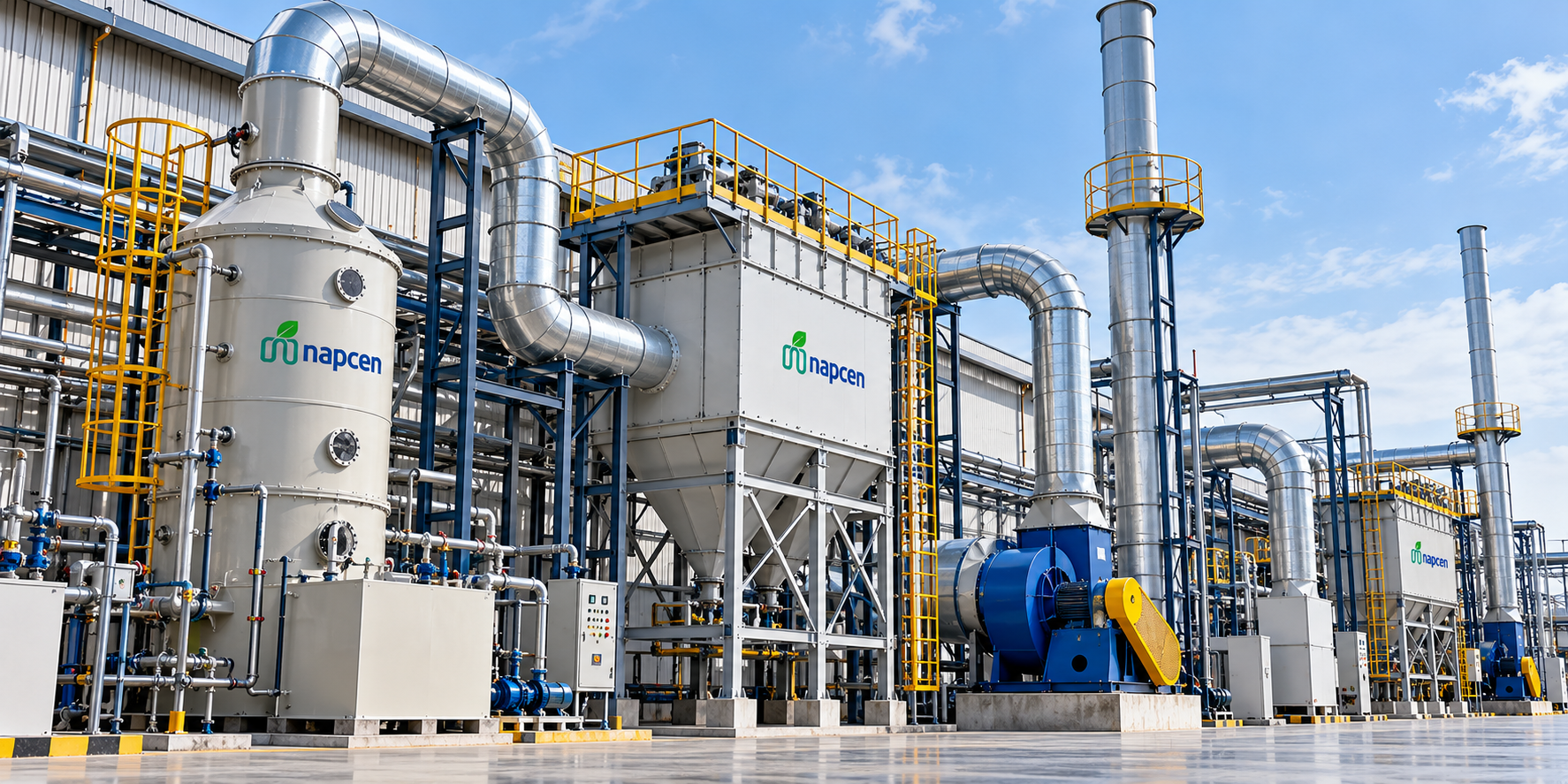
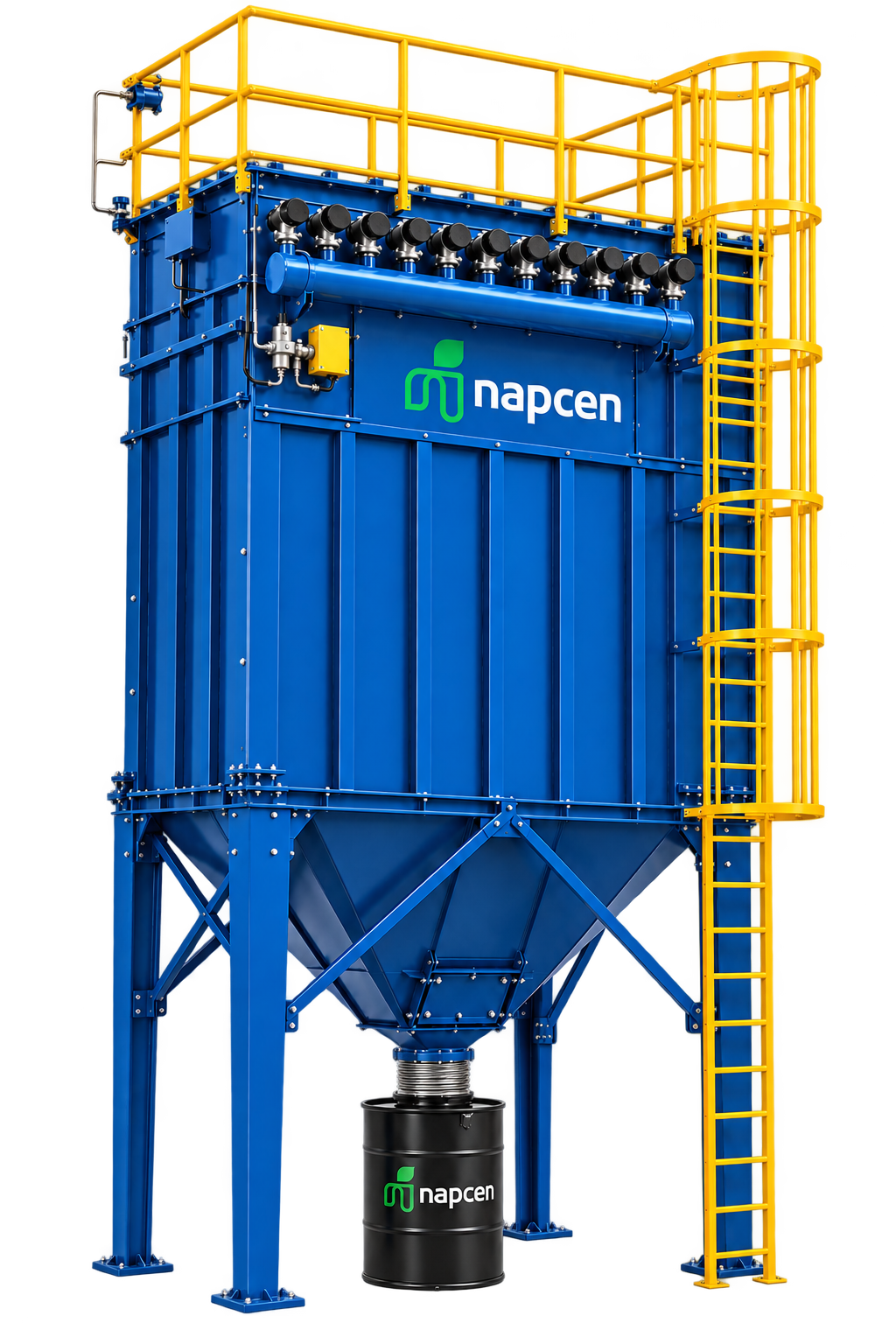
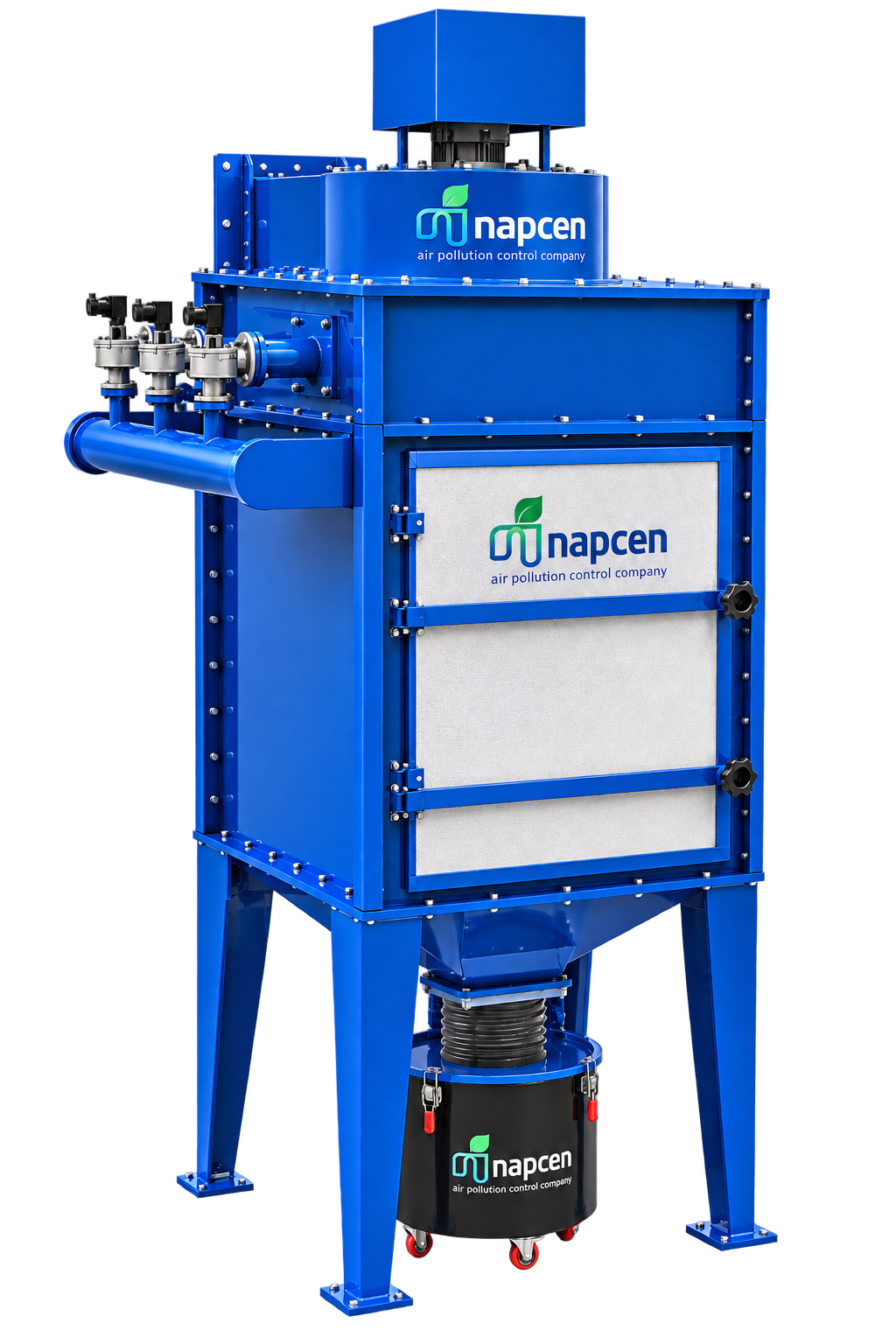
    Improve industrial air quality with NAPCEN's advanced dust collection systems. We manufacture pulse jet baghouse dust collectors, cartridge dust collectors, cyclone separators, and customized dust extraction solutions for manufacturing and processing industries.
  • Industrial Dry Scrubber Manufacturer for Gas & Odour Control
    DRY SCRUBBER & GAS TREATMENT

    Industrial Dry Scrubber Manufacturer for Gas & Odour Control

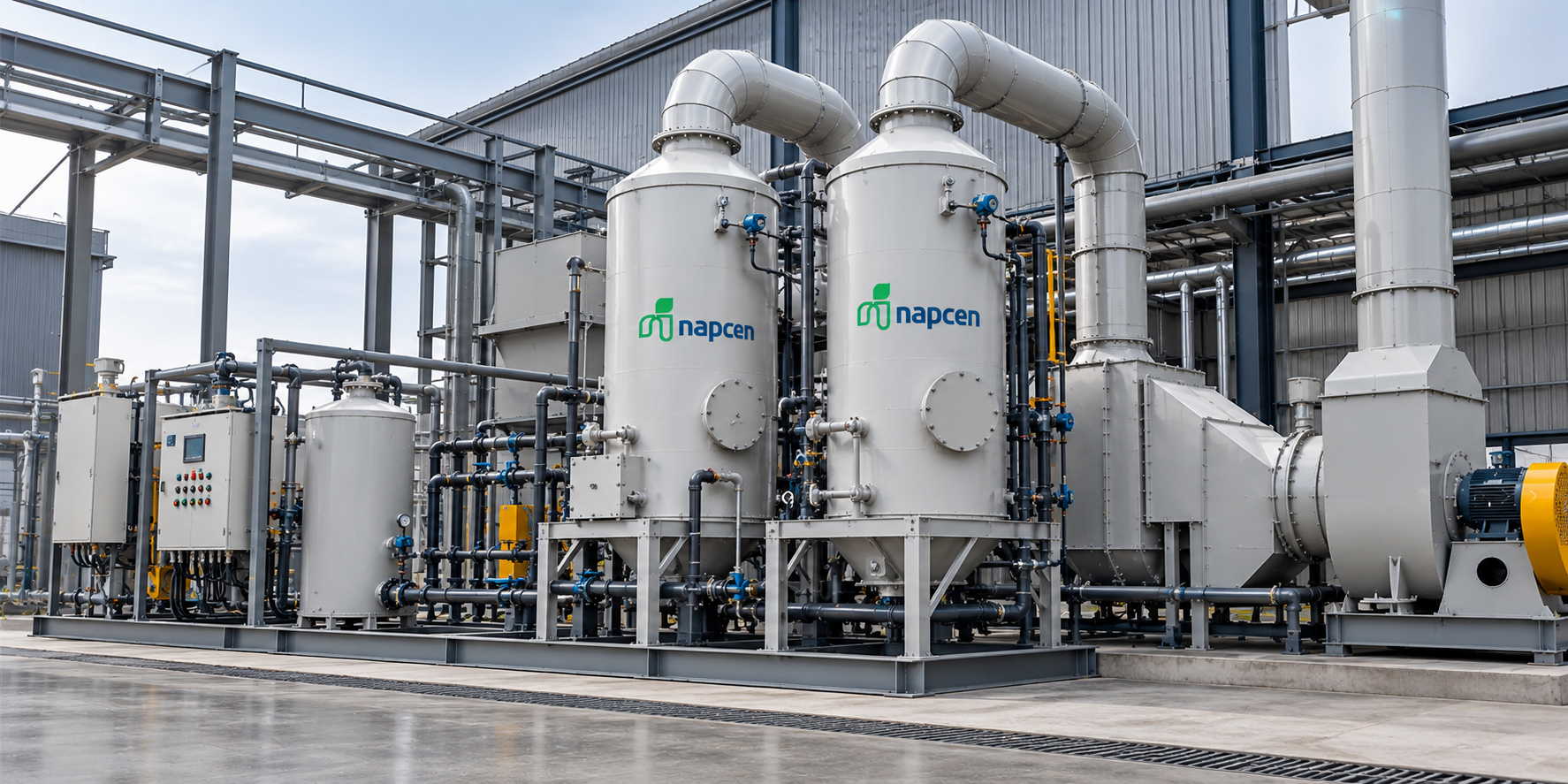
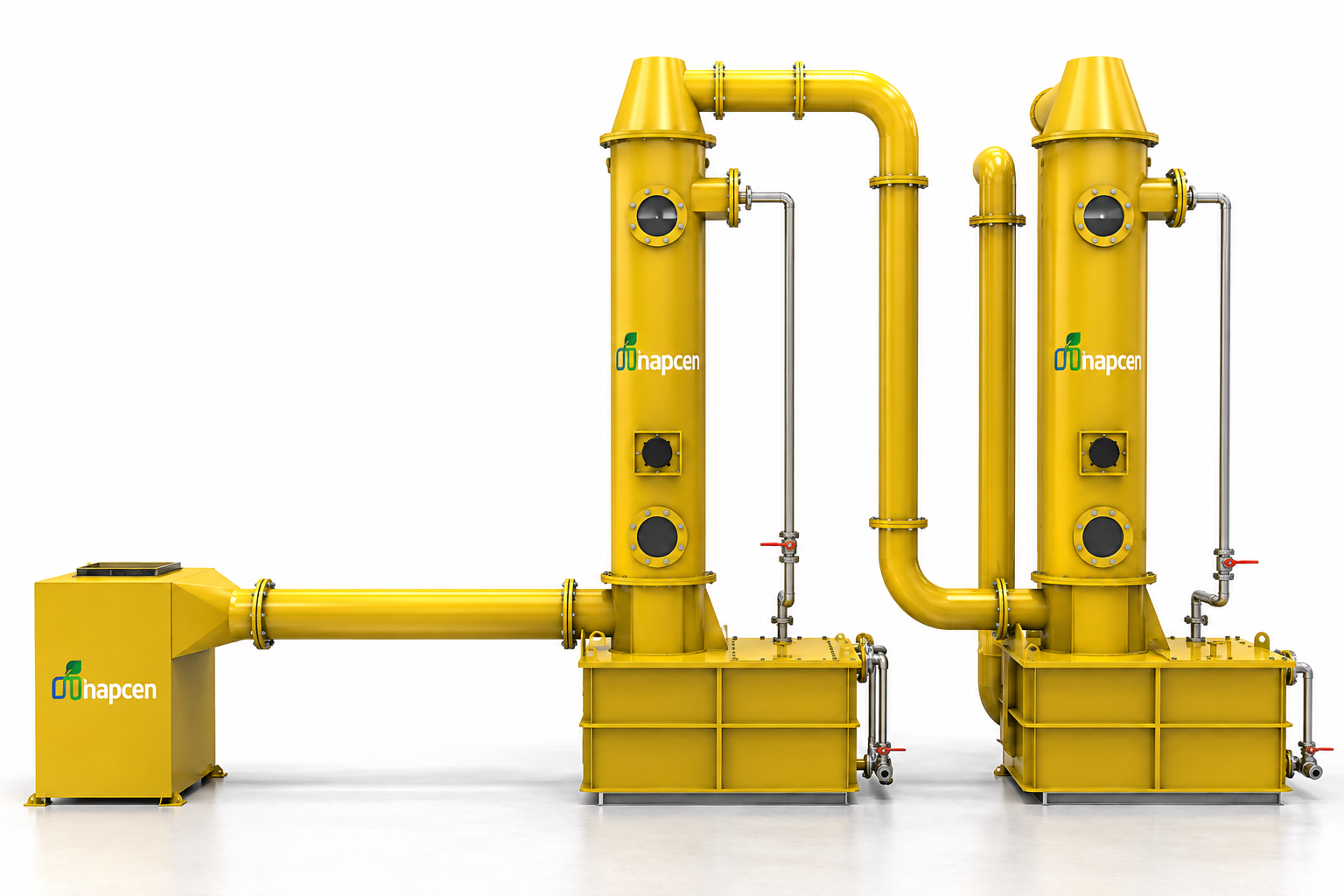
    NAPCEN offers engineered dry scrubber systems for H2S removal, VOC treatment, biogas purification, and industrial odour control. Our customized adsorption and dry media filtration solutions help industries manage harmful gases and improve environmental performance.
  • Industrial Fume Extractor Manufacturer for Effective Fume Removal
    FUME EXTRACTION EQUIPMENT

    Industrial Fume Extractor Manufacturer for Effective Fume Removal

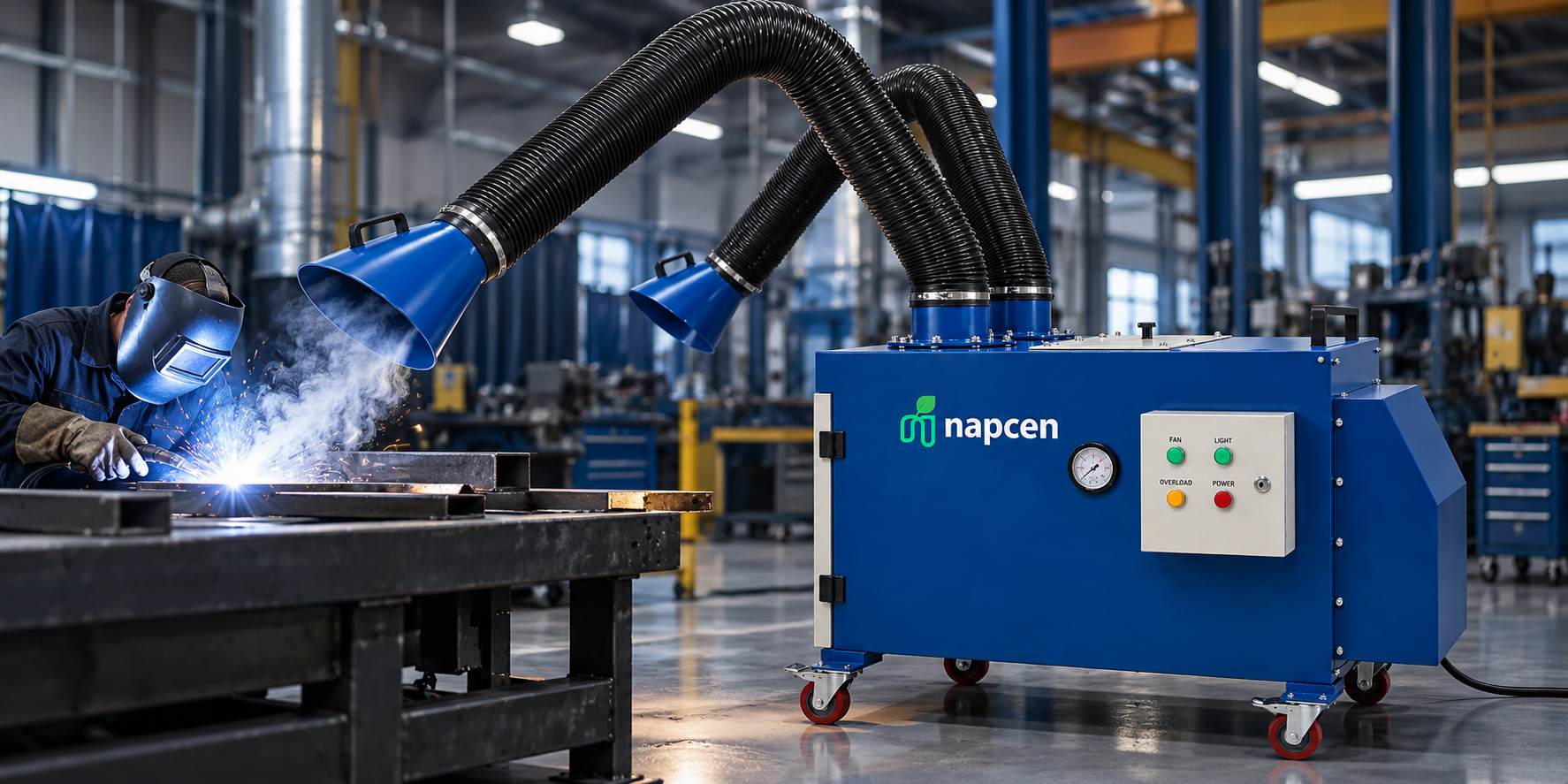
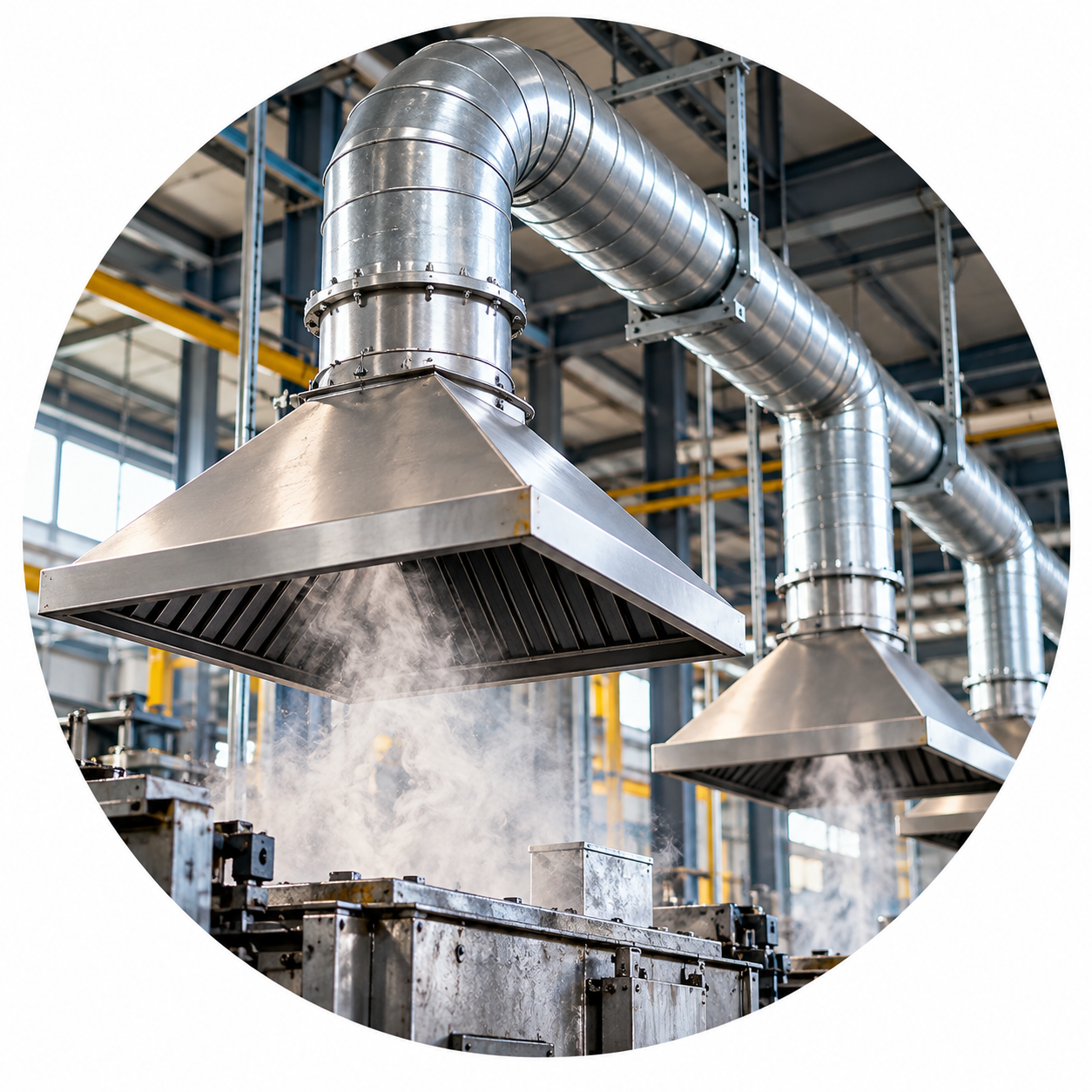
    Protect industrial workplaces with NAPCEN's efficient fume extraction systems. Our welding fume extractors, laser fume extractors, portable fume extraction units, and centralized extraction systems are engineered to capture airborne contaminants at their source.
  • Industrial Downdraft Table Manufacturer for Dust & Fume Extraction
    DOWNDRAFT WORKSTATIONS

    Industrial Downdraft Table Manufacturer for Dust & Fume Extraction

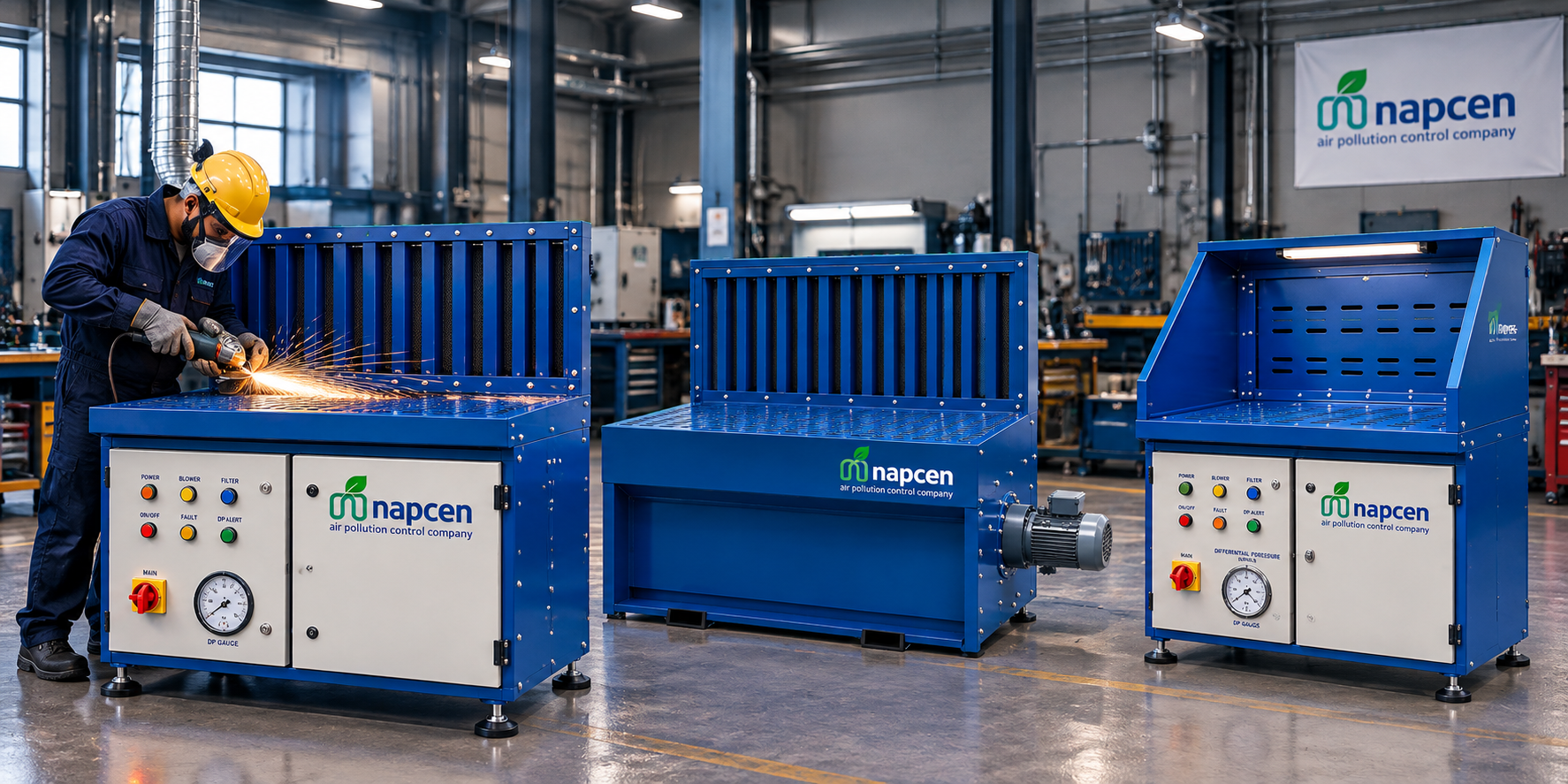
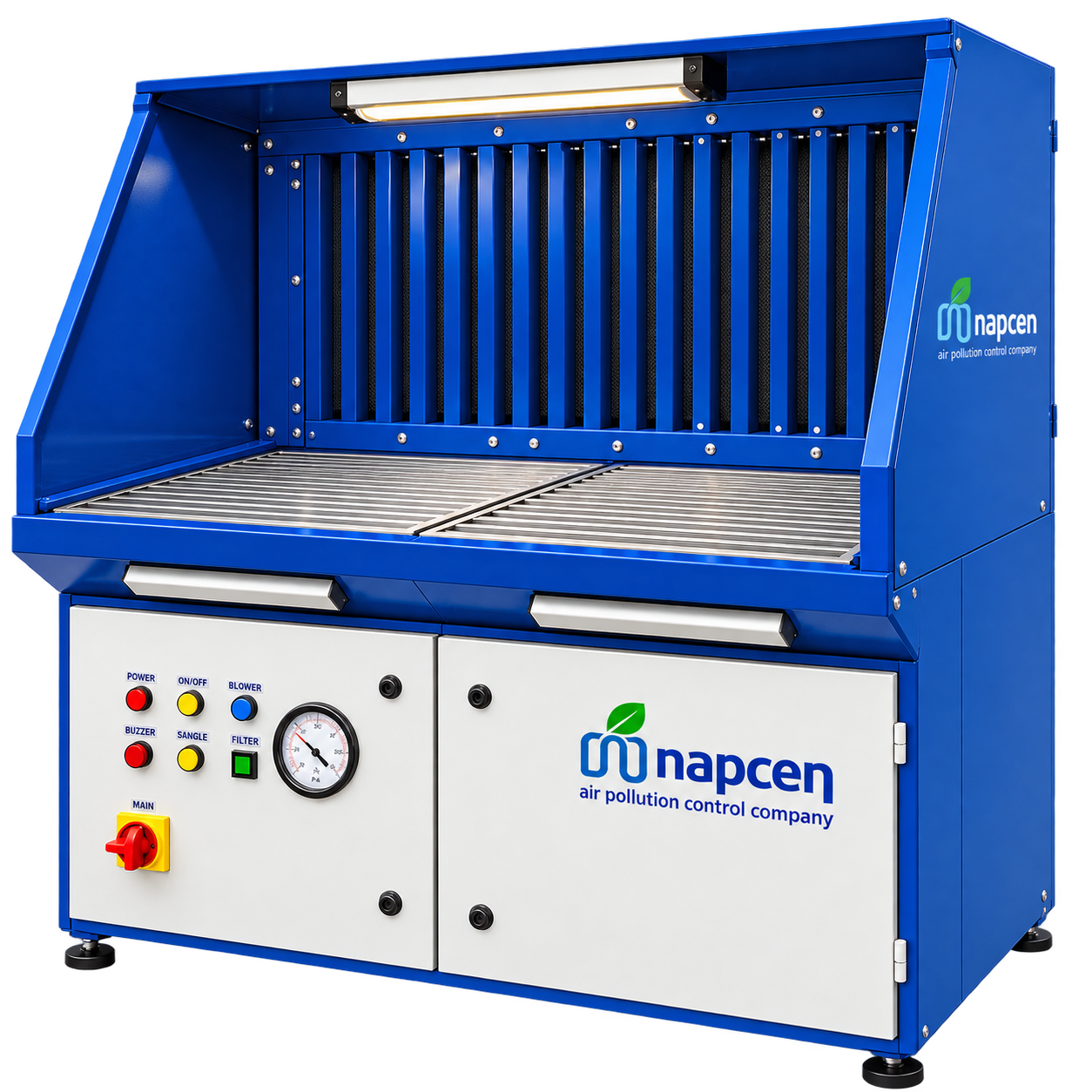
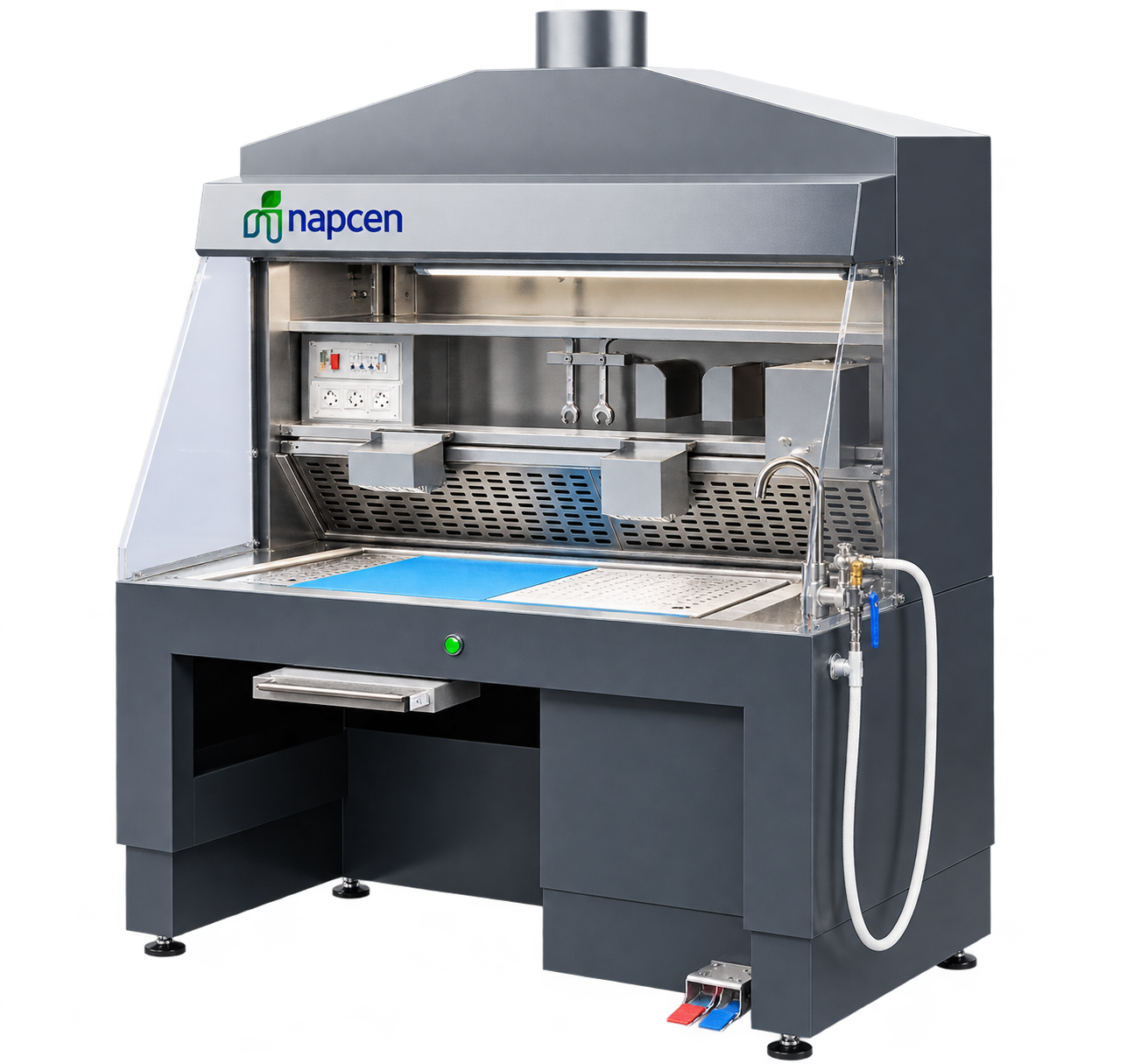
    NAPCEN designs and manufactures industrial downdraft tables for grinding, polishing, welding, metal finishing, and woodworking applications. Our customized extraction workstations help capture dust and fumes directly at the working surface.
  • Custom-Engineered Air Pollution Control Solutions for Global Industries
    CUSTOM ENGINEERED SYSTEMS

    Custom-Engineered Air Pollution Control Solutions for Global Industries

    From initial consultation and equipment design to manufacturing, installation, and commissioning, NAPCEN delivers application-specific air pollution control solutions. Supporting chemical, pharmaceutical, automotive, metal processing, wastewater treatment, and other industrial sectors.
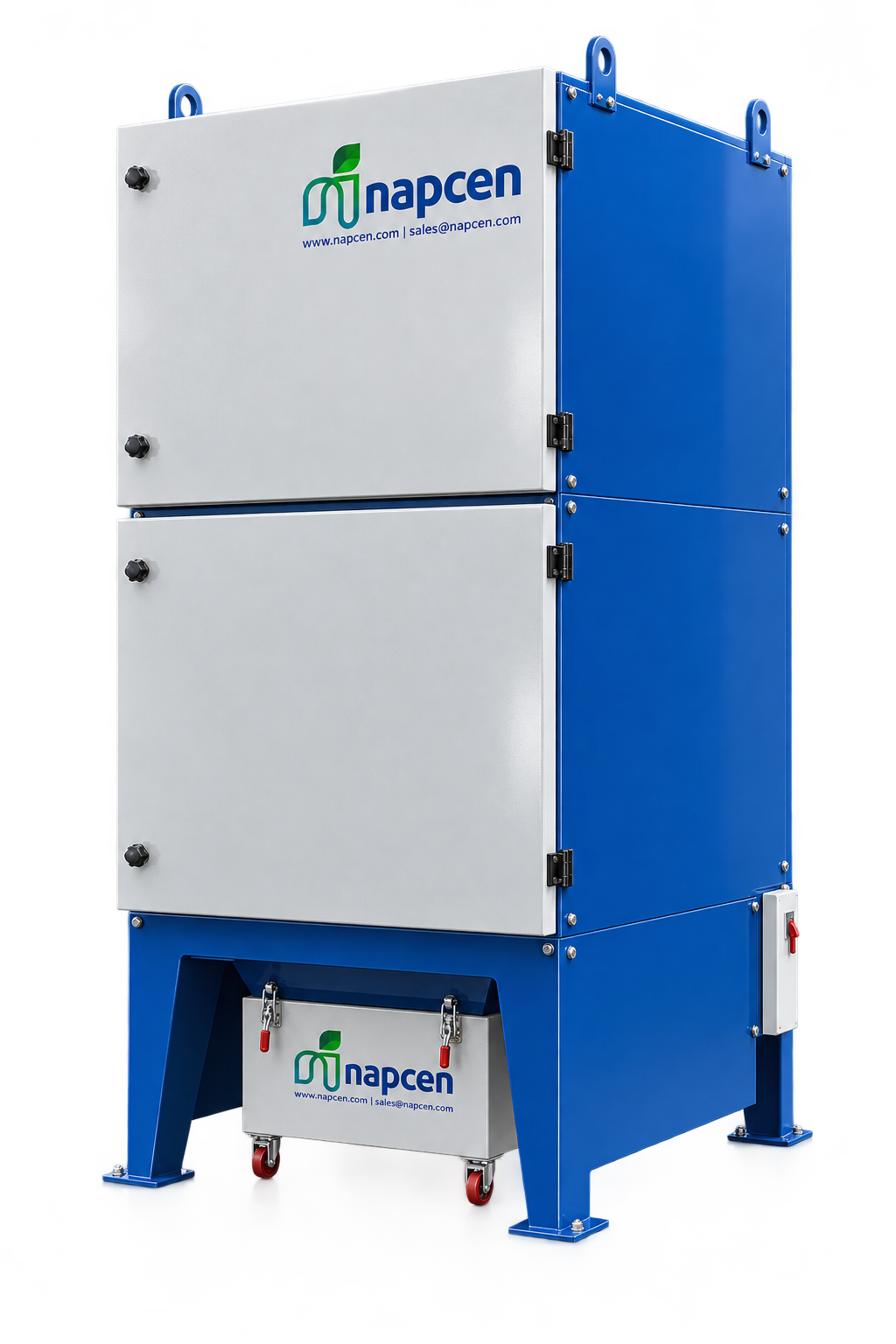
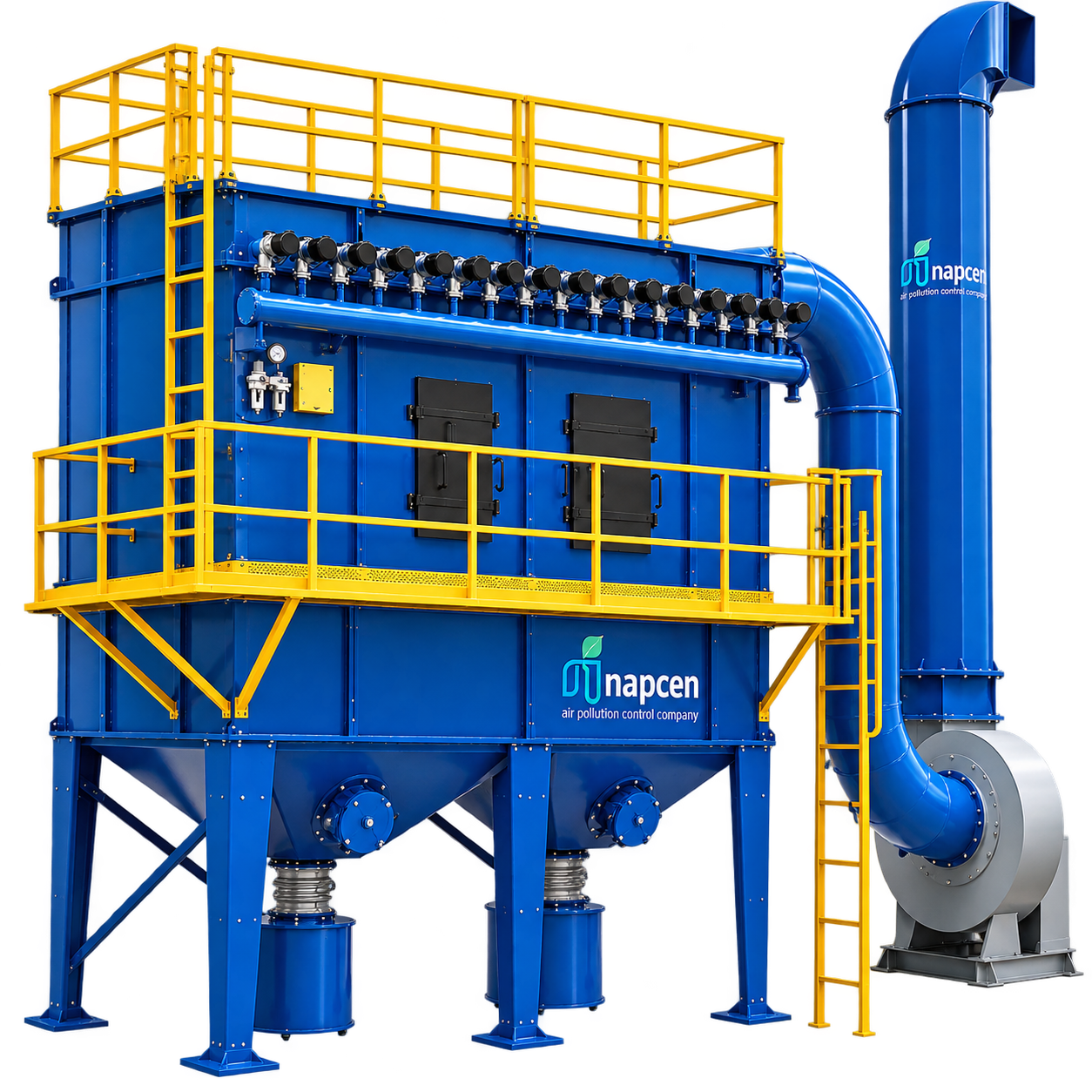
Industrial Bag Filter System Infographic
ABOUT NAPCEN

Engineering Cleaner Industrial Operations

NAPCEN is an India-based manufacturer of industrial air pollution control equipment, providing solutions for air filtration, dust extraction, gas scrubbing and industrial ventilation applications.

We focus on selecting appropriate equipment for specific operating conditions. Pollutant characteristics, exhaust volume, temperature, pressure, layout and maintenance requirements all influence the engineering approach.

Our product range supports manufacturing facilities, chemical processing plants, fabrication workshops and other industrial operations.

Explore Our Capabilities
OUR EQUIPMENT PORTFOLIO

Our Industrial Air Pollution Control Equipment

Explore NAPCEN's range of industrial air pollution control systems designed for dust collection, gas treatment, fume extraction and source-level contaminant capture. Equipment is selected according to the characteristics of the emission source, operating conditions and required treatment objectives.

Industrial Wet Scrubbers - NAPCEN
01 GAS TREATMENT

Industrial Wet Scrubbers

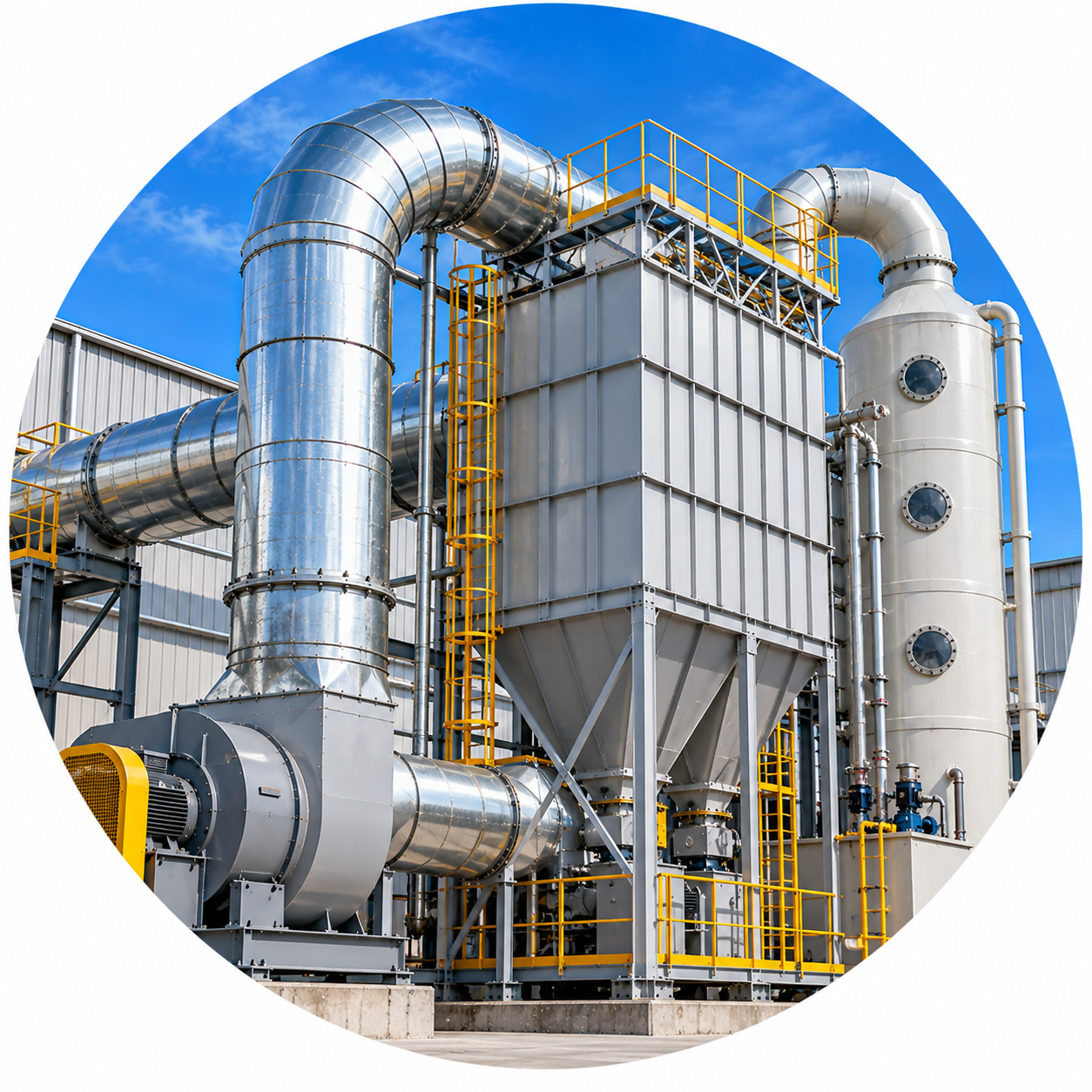
Wet scrubbers use liquid contact to absorb, neutralize or capture suitable contaminants from industrial exhaust streams. NAPCEN's wet scrubber range includes packed bed scrubbers, venturi scrubbers, acid fume scrubbers and application-specific gas treatment systems.

Applications: Chemical processing, electroplating, acid handling, process ventilation and industrial gas treatment.
02 DUST COLLECTION

Industrial Dust Collectors

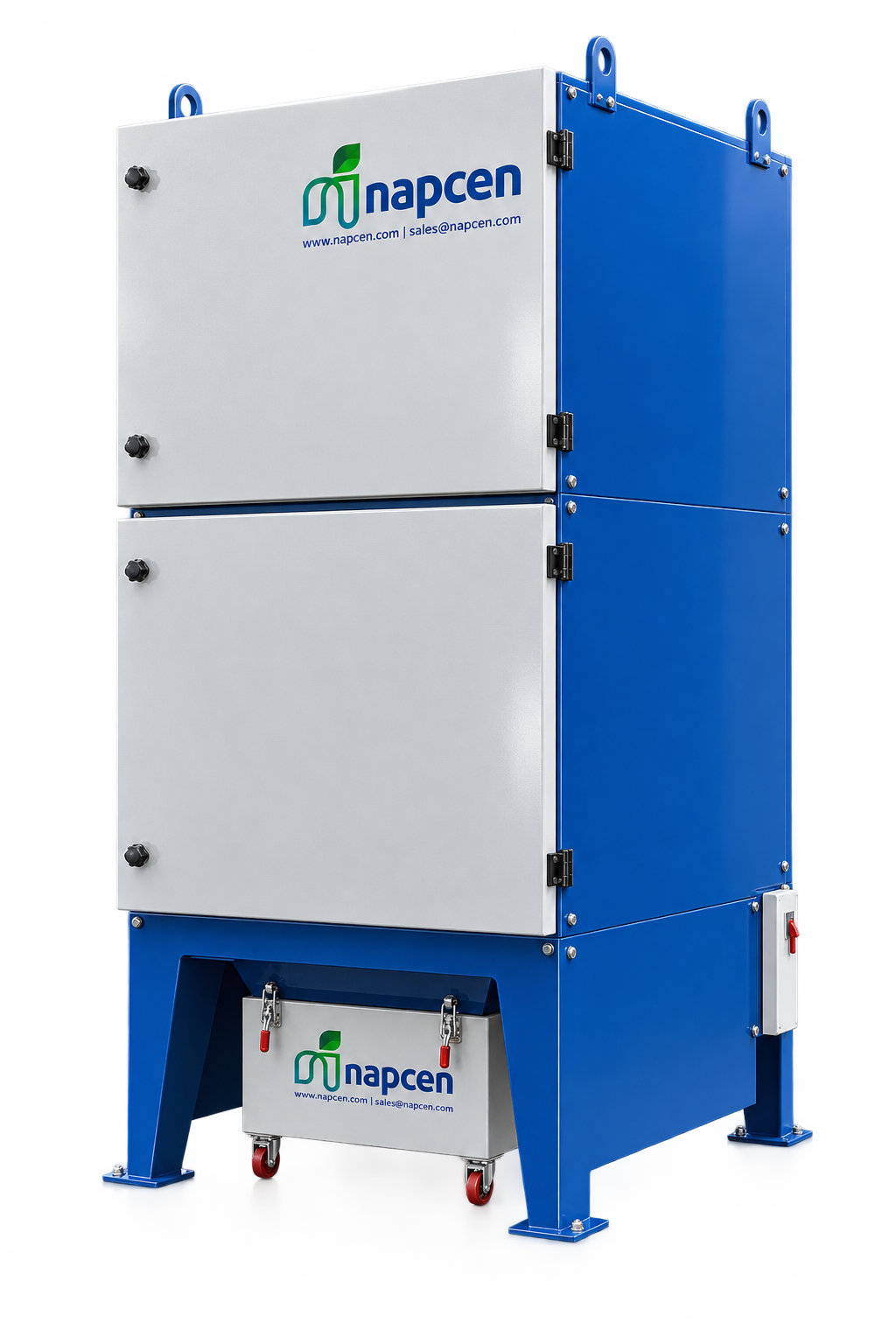
Industrial dust collection systems capture airborne particulate matter generated during manufacturing and material-handling operations. NAPCEN offers baghouse dust collectors, cartridge dust collectors, cyclone separators, portable dust collectors and other filtration configurations.

Applications: Grinding, powder handling, woodworking, metal processing, blasting and industrial material handling.
Industrial Dust Collectors - NAPCEN
Industrial Dry Scrubbers - NAPCEN
03 ADSORPTION & ODOR

Industrial Dry Scrubbers

Dry scrubber systems treat selected gases, vapors and odors using suitable dry media, adsorption materials or chemical reagents. NAPCEN's range includes H2S treatment systems, VOC adsorption equipment, odor control units and portable dry scrubbers.

Applications: Biogas treatment, sewage treatment facilities, chemical processes and industrial odor management.
04 WORKBENCH CAPTURE

Industrial Downdraft Tables

Downdraft tables are source-capture workstations designed to draw airborne dust and suitable process contaminants away from the operator's working area. NAPCEN manufactures downdraft table configurations for grinding, polishing, welding and related fabrication processes.

Applications: Metal fabrication, surface finishing, deburring, polishing and industrial workstations.
Industrial Downdraft Tables - NAPCEN
Industrial Fume Extractors - NAPCEN
05 FUME EXTRACTION

Industrial Fume Extractors

Fume extraction systems capture fumes and airborne contaminants near their point of generation. NAPCEN provides extraction solutions for welding, laser cutting, laboratory processes and other industrial operations requiring localized ventilation.

Applications: Welding, laser and plasma cutting, fabrication workshops, laboratories and industrial process stations.

Choose equipment according to your pollutant

Corrosive or soluble gases

Evaluate packed bed and other wet scrubbing configurations based on gas chemistry and liquid treatment.

Airborne industrial dust

Compare baghouse, cartridge, cyclone and wet dust collection approaches according to dust characteristics.

Selected odors and vapors

Assess dry media or adsorption systems using concentration, humidity and media service-life requirements.

Grinding, welding and cutting

Use source-capture tables or extraction arms with appropriate filtration and safe handling of process hazards.

Equipment suitability, safety requirements and performance must be verified for each process. Some dusts and vapors require specialized hazard controls.

WHY NAPCEN

Technical Solutions Built Around
Your Application

Equipment selection should reflect the real requirements of the industrial process, not a one-size-fits-all catalogue.

01

Application-Focused Engineering

Equipment selection based on pollutant characteristics, process airflow and operating conditions.

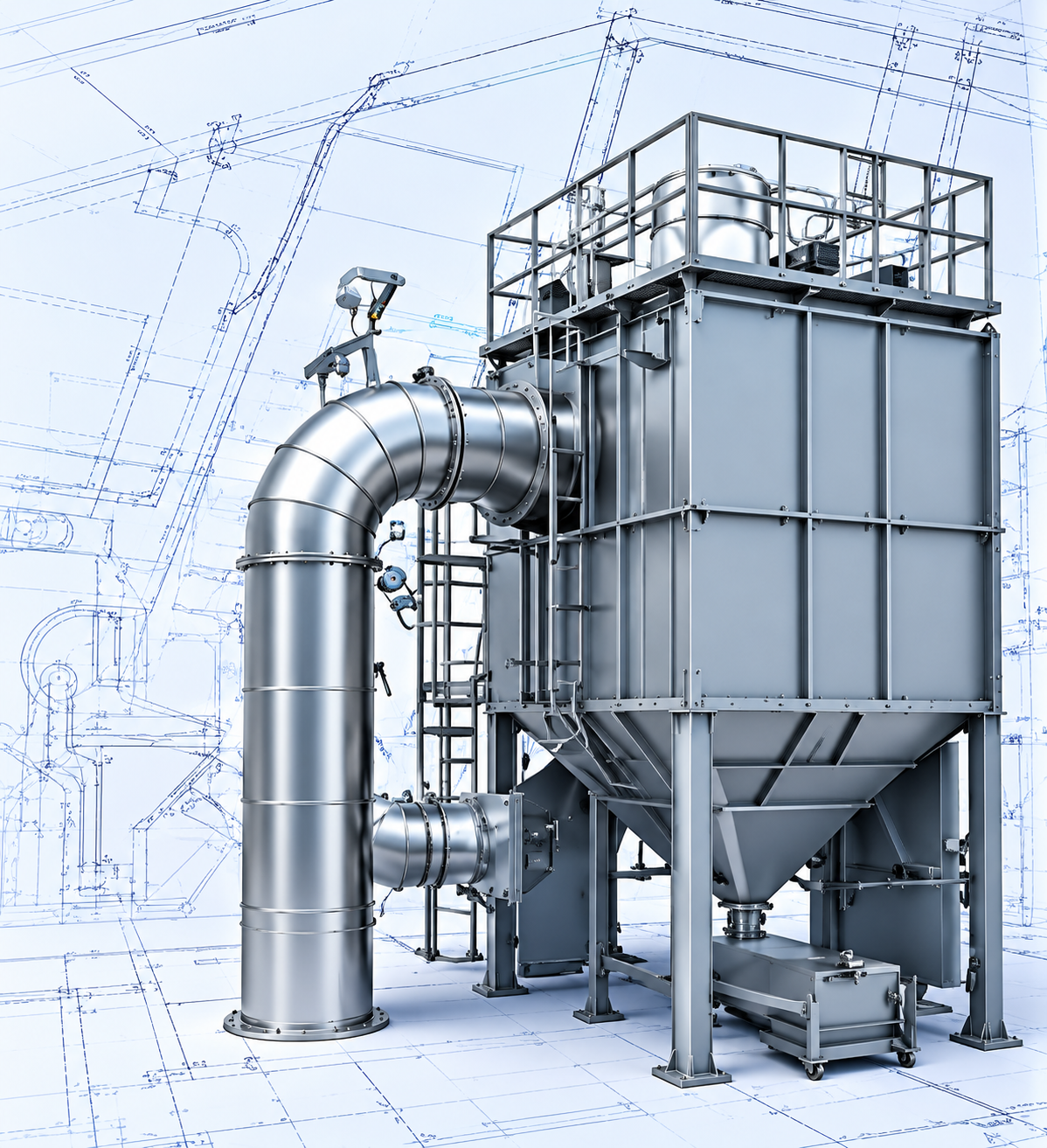
Application-Focused Engineering - Industrial Dust Collector Blueprint Rendering
02

Industrial Manufacturing

Equipment configurations developed for diverse industrial processes and manufacturing facilities.

Industrial Manufacturing - Photorealistic Petrochemical Refinery Towers
03

Customized Configurations

Dimensions, materials and arrangements reviewed according to project requirements.

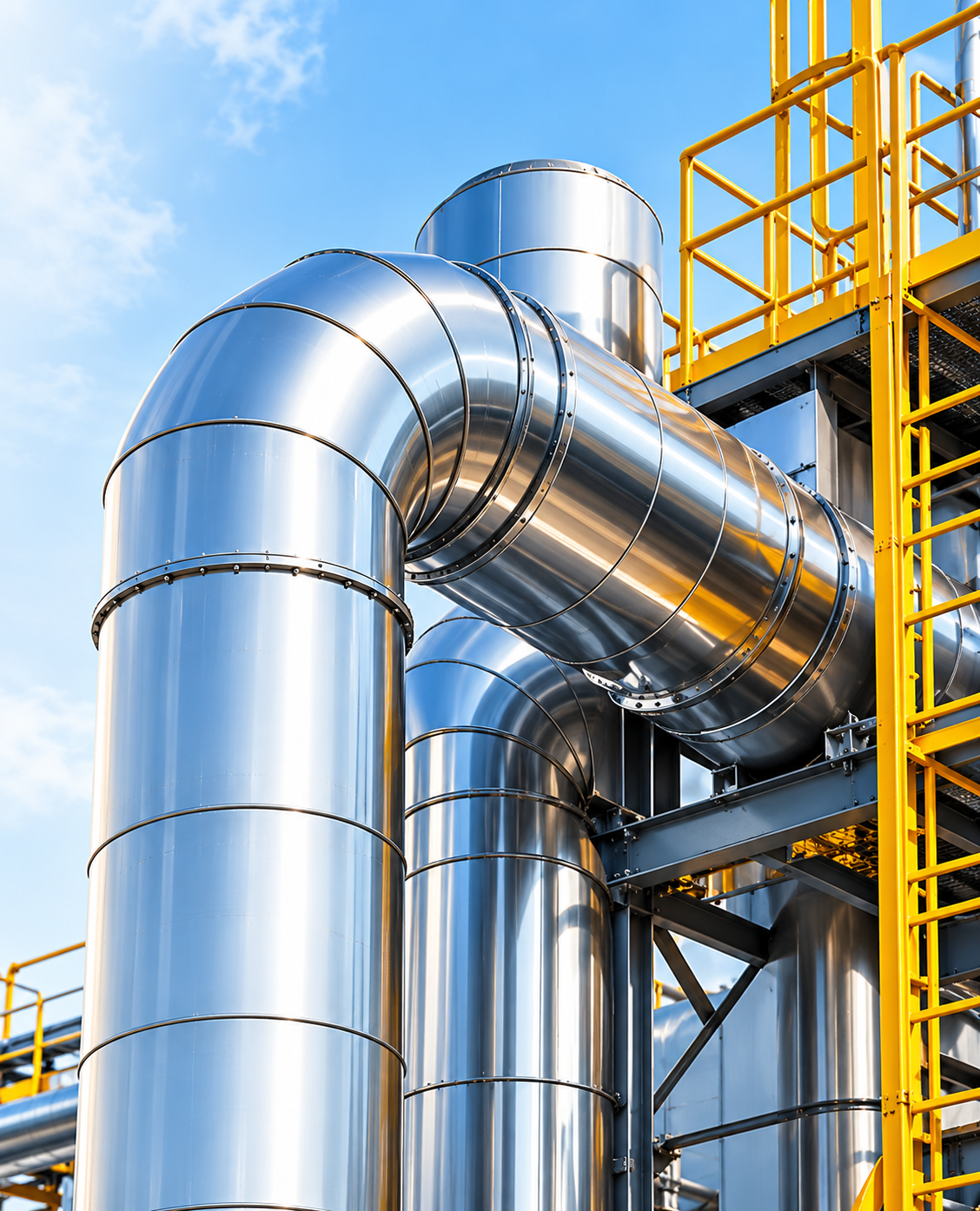
Customized Configurations - Reflective Steel Piping and Yellow Walkways
04

System-Level Approach

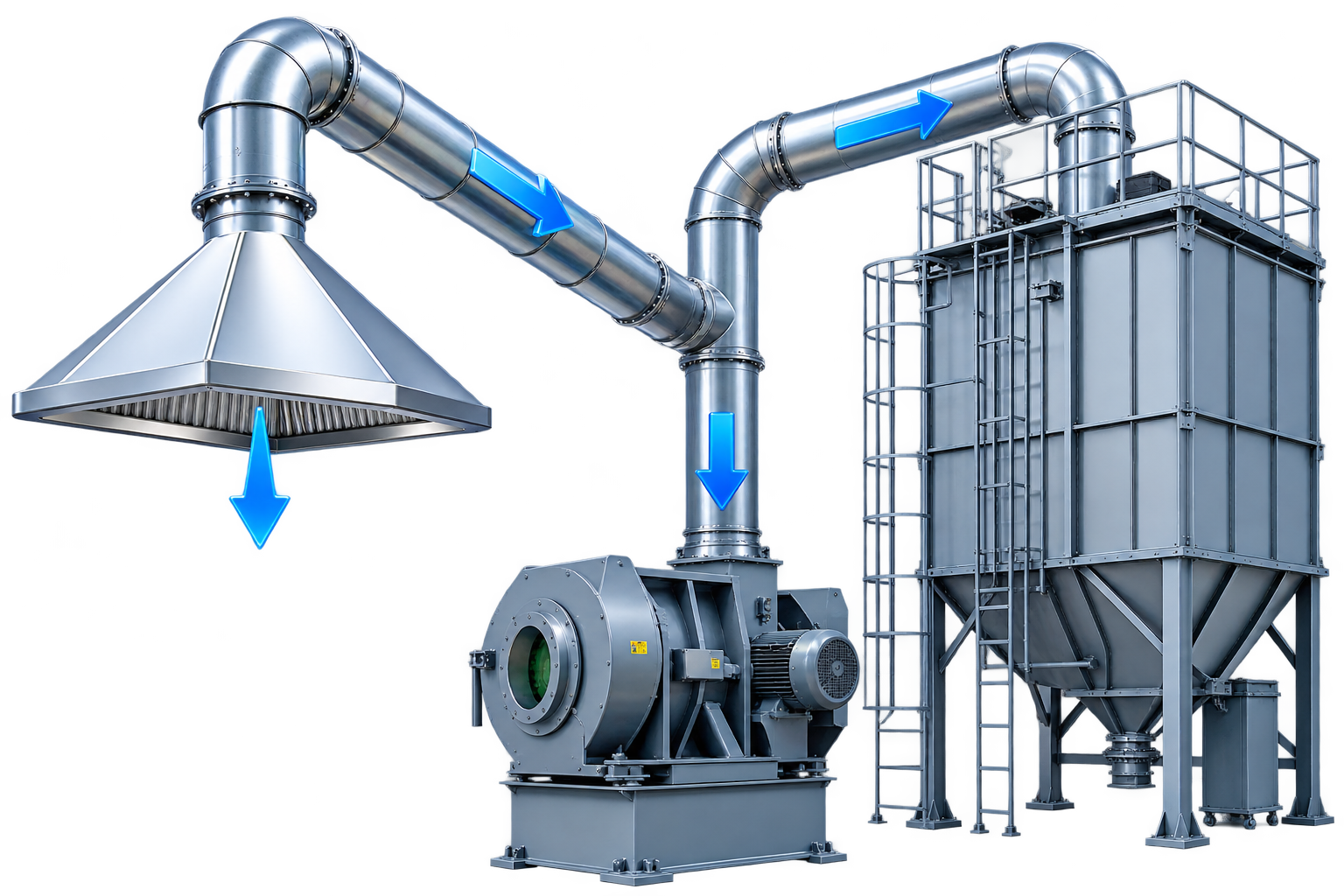
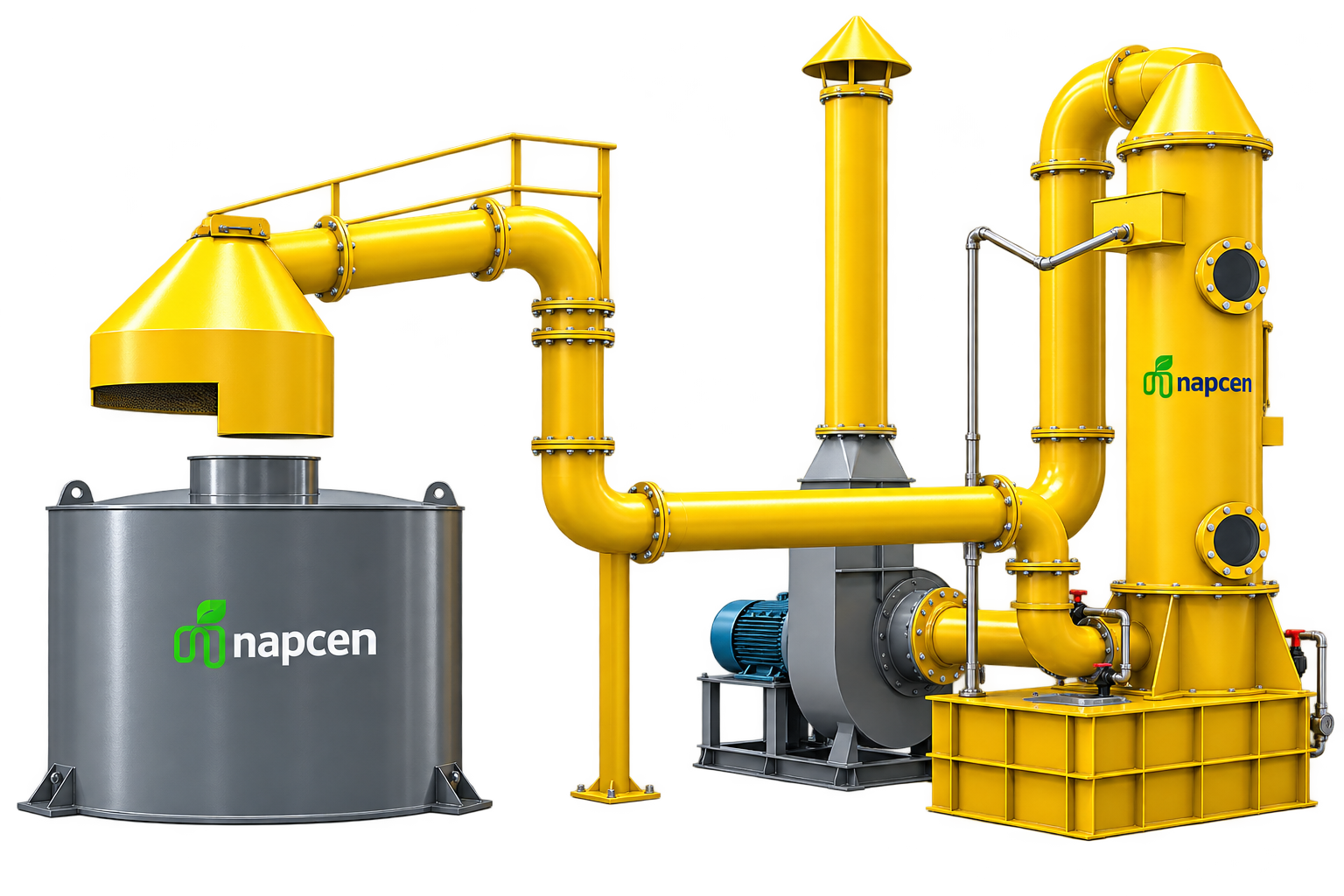
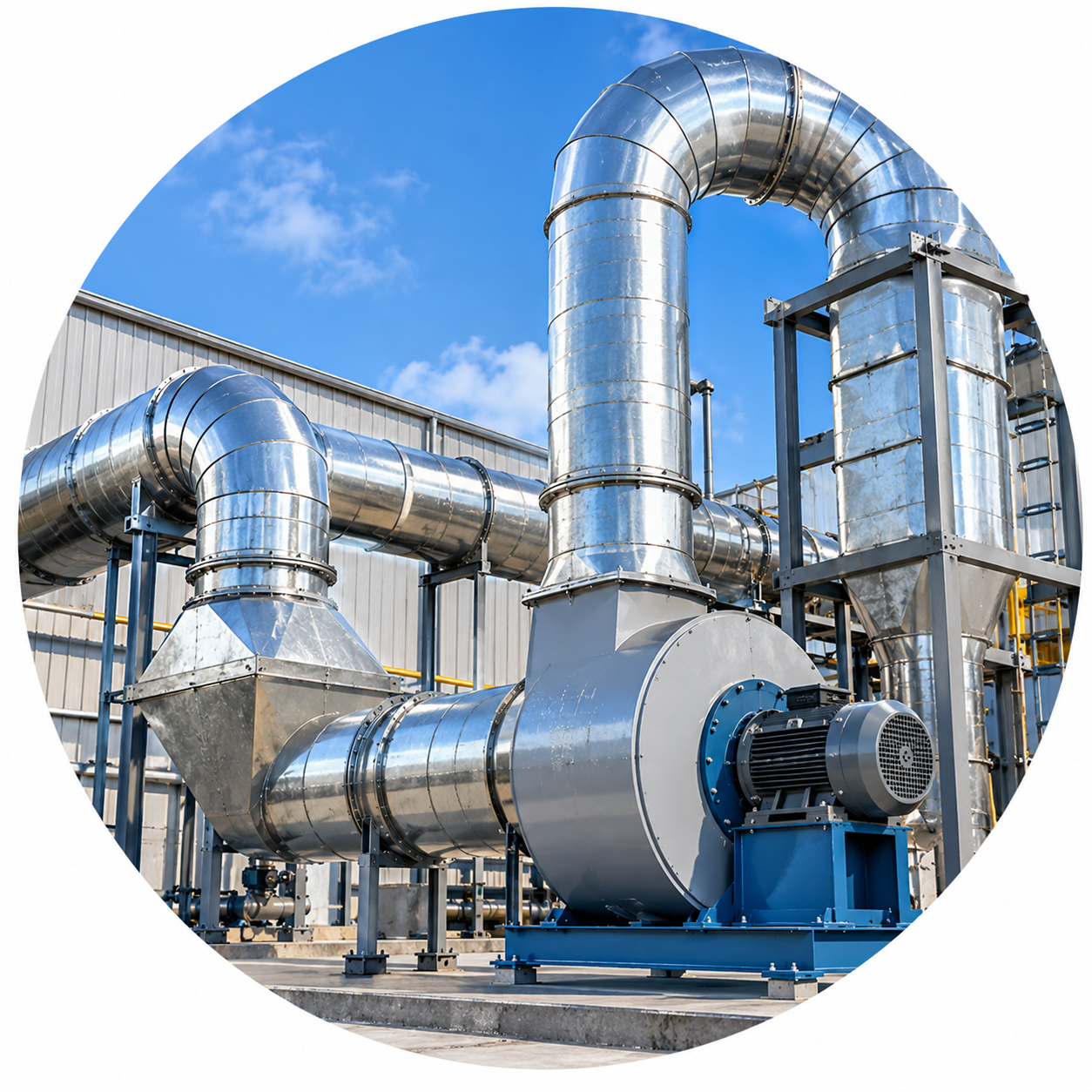
Consideration of capture hoods, ducting, fans, filtration and treatment as connected elements.

System-Level Approach - Industrial Dust Extraction System
05

Maintenance Considerations

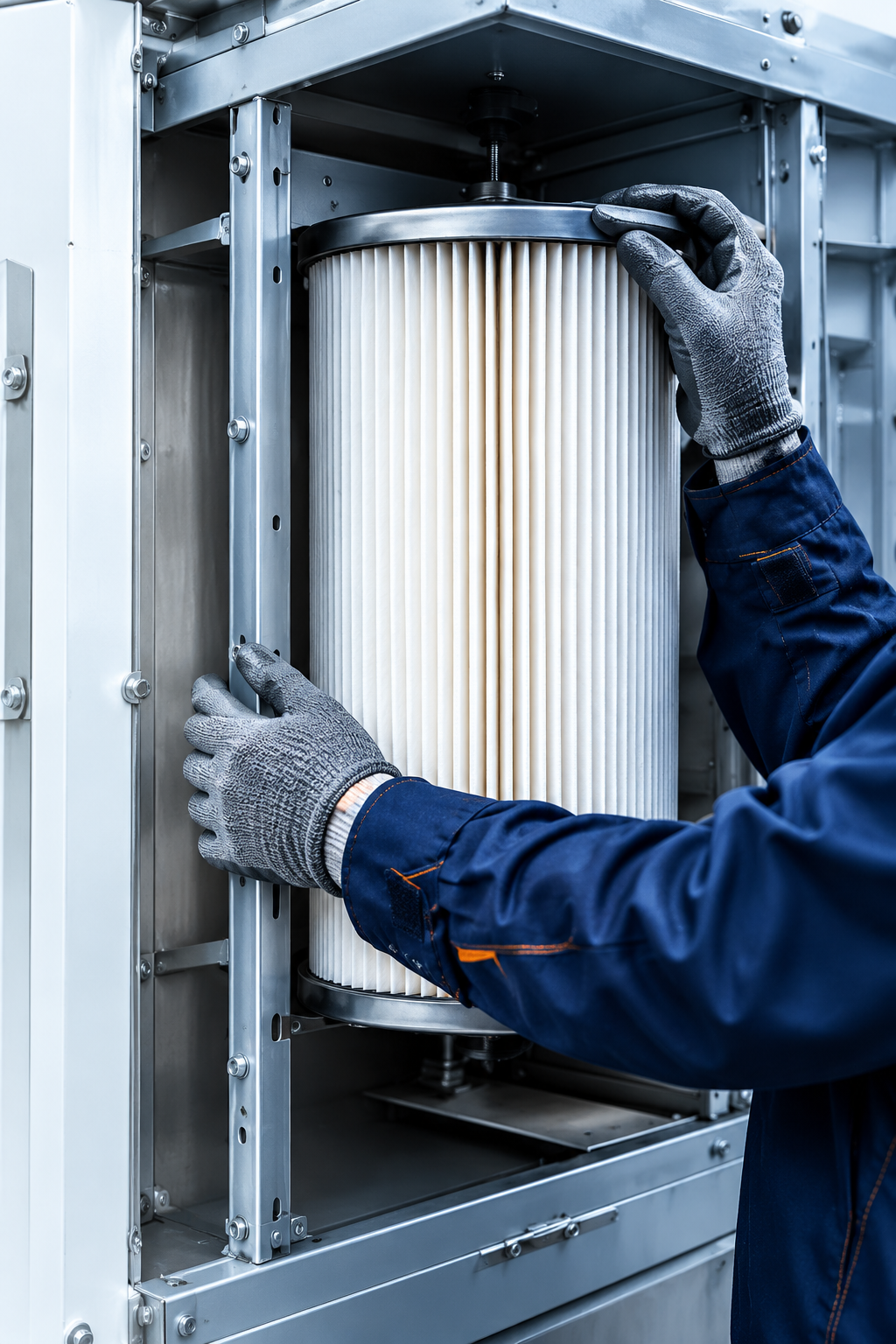
Attention to inspection access, filter servicing, cleaning and consumables.

Maintenance Considerations - Industrial Filter Maintenance in Progress
06

Technical Requirement Review

Evaluation of available process information before recommending equipment configurations.

Technical Requirement Review - Blueprints and Precision Engineering Desk
CUSTOM ENGINEERED EQUIPMENT

Customized Air Pollution
Control Systems for
Your Process

Industrial emission control equipment must account for airflow, pollutant composition, process temperature, available space and treatment objectives.

NAPCEN reviews project requirements to identify suitable equipment configurations, construction materials and integration arrangements.

Airflow & gas volume

Process airflow requirements

Pollutant properties

Particle, fume and gas characteristics

Temperature & pressure

Operating conditions and limits

Materials of construction

Suitable materials for your process

Ductwork & fan integration

System layout and airflow design

Maintenance access

Serviceability and safe access

Napcen Industrial Filtration System
Industrial Applications

Supporting Air Pollution Control Across Industries

Different processes require different methods of capture, filtration, absorption or adsorption.

Discuss your requirements
01
Chemical & Pharmaceutical

Chemical & Pharmaceutical

Chemical fumes, process gases and powder handling.

02
Metal Fabrication

Metal Fabrication

Welding, grinding, polishing and cutting emissions.

03
Electronics Manufacturing

Electronics Manufacturing

Selected soldering and precision manufacturing extraction.

04
Food Processing

Food Processing

Powder handling, processing and packaging dust.

05
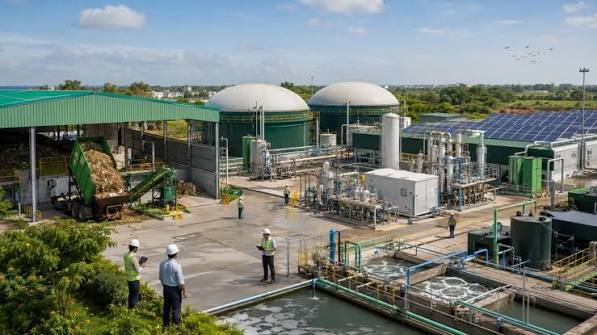
Biogas & Wastewater STP Scrubber

Biogas & Wastewater

Selected hydrogen sulfide and odor treatment.

06
Woodworking

Woodworking

Sawdust and airborne particles from machining.

Applications beyond a single industry

Industrial emission control may also be required in surface treatment and electroplating, powder coating, battery manufacturing, mineral processing, textiles, paint and coatings,
boiler exhaust treatment and industrial wastewater facilities. Each application should be evaluated using actual process data rather than a generic equipment specification.

Technical Selection Guide

What Information Is Needed to Size an Industrial Pollution Control System?

A technically useful quotation begins with the process conditions. Share the following information when available; our team can identify missing inputs during the enquiry review.

Talk to our engineers
Technical review includes duct sizing, static pressure calculations and supply boundary definition.
01
01 / Process

Emission source & application

Industry, production operation, equipment connection points, duty cycle and process description.

02
02 / Gas stream

Airflow & temperature

Actual or normal flow, operating temperature, pressure, moisture and exhaust variability.

03
03 / Pollutant

Composition & loading

Dust characteristics, gas species, concentration, particle size and chemical compatibility.

04
04 / Performance

Required outlet condition

Emission target, applicable standards, monitoring requirements and treatment objectives.

05
05 / Installation

Space & utilities

Footprint, duct layout, electrical supply, water availability, drainage and access constraints.

06
06 / Procurement

Delivery & documentation

Destination, materials, drawings, inspections, commercial scope and requested delivery schedule.

APPLICATION EXPERIENCE

Industrial Equipment Projects

Project case studies should demonstrate actual NAPCEN equipment, operating requirements and installation conditions.

01
Wet Scrubber Applications

Wet Scrubber Applications

Industrial gas and fume treatment

02
Dust Collector Applications

Dust Collector Applications

Particulate capture and filtration

03
Downdraft Table Applications

Downdraft Table Applications

Localized dust and fume capture

What you will find in a verified NAPCEN case study

Industry & challenge
Equipment and scope
Design airflow and pollutant
Manufacturing / installation photographs
Commissioning and measured results

This preview does not invent customer names, completed installations or performance figures. Replace illustrative project cards with approved NAPCEN project evidence.

MANUFACTURING & ENGINEERING

From Technical Requirements to
Manufactured Equipment

Technical evaluation, equipment configuration, fabrication and project coordination are essential to practical industrial air pollution control.

Equipment Design

Review of process conditions, airflow requirements, layout and equipment configuration.

Manufacturing

Fabrication of industrial scrubbers, dust collectors and extraction systems according to agreed specifications.

Project Coordination

Consideration of equipment interfaces, access, inspection and installation requirements within the agreed scope.

INTERNATIONAL B2B ENQUIRIES

India-Based Manufacturing for International Industrial Requirements

NAPCEN welcomes technical enquiries from industrial companies, engineering consultants, procurement teams and project contractors evaluating pollution control equipment for domestic and overseas applications.

Global

Supply Capability

Technical

Documentation

Export

Packing & Logistics

Dedicated

Technical Support

Share the destination country, process details and technical specifications for equipment review and quotation discussions. Shipping and service arrangements should be confirmed for each project.

Additional Information

International procurement teams may request information about export packing, equipment dimensions, documentation, spare parts, delivery terms and available technical support. These items should be confirmed in each project offer rather than assumed to be included.

Napcen Industrial Filtration System for Global Applications

Markets for Targeted Enquiries

Global Presence
United Arab Emirates
Saudi Arabia
Oman
Qatar
Kuwait
Malaysia
Singapore
Indonesia
Vietnam
Thailand
Bahrain
Australia
United Kingdom
United States
Germany
INDUSTRIAL BUYER CONFIDENCE

Technical Documentation, References &
After-Sales Clarity

Industrial procurement requires more than a product photograph. NAPCEN can strengthen customer confidence by presenting verified project references, clear commercial scope and documentation appropriate to the equipment supplied.

01
ENGINEERING

Technical specifications

  • Design basis and process parameters
  • Dimensional drawings and GA / P&ID
  • Materials of construction and performance data
02
MANUFACTURING

Inspection & quality records

  • Agreed fabrication checks and test records
  • Quality assurance documentation
  • Material certificates and inspection reports
03
PROJECT EVIDENCE

Customer-approved case studies

  • Genuine project references (with authorization)
  • Application conditions and operating results
  • Commercial scope and project-specific documentation
04
LIFECYCLE

Service & maintenance planning

  • Recommended inspection access and layout
  • Spare parts and consumables list
  • Maintenance documentation as applicable
WORKING PRINCIPLE

How Industrial Air Pollution Control Systems Work

From capturing contaminants at their source to treating the exhaust stream, each stage supports an effective overall system.

01
Emission Source - Dust, gases and fumes

Emission Source

Dust, gases and fumes

02
Source Capture - Hoods and extraction points

Source Capture

Hoods and extraction points

03
Conveyance - Ducts and fans

Conveyance

Ducts and fans

04
Treatment - Filtration or scrubbing

Treatment

Filtration or scrubbing

05
Treated Exhaust - Designed discharge

Treated Exhaust

Designed discharge

TECHNICAL KNOWLEDGE

Industrial Air Pollution
Control Resources

Engineering-focused guidance on equipment selection, treatment technologies and operational considerations.

SCRUBBER ENGINEERING

Wet Scrubber Working Principle

Understand liquid-gas contact, pollutant absorption and key industrial design considerations.

DUST FILTRATION

How to Select a Dust Collector

Compare airflow requirements, dust characteristics, cartridge filters and baghouse configurations.

GAS TREATMENT

Dry Scrubber Media Selection

Explore adsorption, chemical media, pressure drop and replacement considerations.

Testimonial

Frequently Asked Questions

Industrial Air Pollution Control FAQs

  • What is industrial air pollution control equipment?
    Equipment used to capture, separate or treat airborne contaminants from industrial processes. Common examples include scrubbers, dust collectors and fume extractors.
  • Which equipment is suitable for my factory?
    Selection depends on pollutant type, airflow, concentration, temperature, moisture and treatment objective. Engineering review is recommended.
  • What is the difference between a wet scrubber and a dry scrubber?
    Wet scrubbers use liquid contact to capture or treat suitable contaminants. Dry scrubbers use dry reagents or treatment media, including adsorbents, according to application.
  • Can industrial pollution control equipment be customized?
    Yes. Dimensions, materials and configurations can be selected according to the application and project requirements.
  • What information is required for a quotation?
    Process description, pollutant, airflow, operating temperature, concentration, duty hours, treatment target and layout drawings where available.
  • What is the difference between a dust collector and a fume extractor?
    Dust collectors primarily capture particulate matter. Fume extraction systems capture suitable fumes near the generation point and require application-specific filtration.
  • Does NAPCEN manufacture equipment for chemical processing?
    NAPCEN offers scrubbers and dust collection equipment applicable to selected chemical processing operations, subject to process and material suitability.
  • Can international customers request a quotation?
    Yes. International buyers can share technical requirements and project country for a quotation discussion. Supply arrangements should be confirmed for each project.
  • How often should equipment be maintained?
    Frequency depends on contaminant loading, equipment type, operating hours and manufacturer recommendations.
  • How should I choose an equipment manufacturer?
    Compare technical suitability, documented experience, materials, inspection requirements, project references, spare parts and lifecycle operating costs.

Our Blogs

How Wet Scrubbers Improve Industrial Air Quality: A Comprehensive Guide

Wet scrubbers are highly effective air pollution control devices that remove harmful gases, vapors, and particulate matter from industrial exhaust streams. By using liquid—often water or chemical solutions—they capture and neutralize pollutants before releasing clean air into the atmosphere. They are particularly efficient in handling sticky, corrosive, or high-moisture dust that dry collectors struggle with. Wet scrubbers also help industries meet strict environmental regulations while protecting workers from hazardous emissions. This guide explores their working principles, benefits, applications, and factors to consider for selecting the right system.

How to Choose the Right Dust Collector for Your Industrial Needs

Choosing the right dust collector for your industrial needs depends on factors like the type of dust generated, air volume, particle size, and regulatory compliance. Evaluate whether you need a baghouse, cartridge, cyclone, or wet scrubber based on your process. Consider efficiency, filter media, and maintenance requirements to ensure consistent performance. Space availability, energy consumption, and cost of ownership also play a key role. The right system not only improves air quality and worker safety but also enhances overall productivity.

Successful Implementation of Downdraft Tables in Metal Fabrication

Implementing downdraft tables in metal fabrication plays a vital role in controlling dust, fumes, and sparks at the source. These systems create a safer working environment by improving air quality and reducing fire hazards. With proper installation and maintenance, downdraft tables enhance productivity, protect worker health, and ensure compliance with safety regulations. They are particularly effective for welding, grinding, and cutting operations. A successful implementation also considers workspace layout, airflow design, and operator training. Together, these factors help metal fabrication facilities achieve cleaner, safer, and more efficient operations.

Our Awesome Customer

GET A TECHNICAL QUOTATION

Looking for an Industrial Air Pollution Control Solution?

Tell NAPCEN about your dust collection, gas scrubbing, odor treatment or fume extraction requirements. Share process details, equipment specifications and project location for a technical quotation discussion.

Location: Puducherry, India
STEP 1 OF 2 · YOUR APPLICATION

Request an engineered quotation

Tell us what your process generates. Approximate values are welcome.

Details are submitted directly to our engineering desk at sales@napcen.com. Required fields are marked *.

Quick Response
Expert Support
Custom Solutions
  • +91-7904469219Mon-Satur, 9am until 6pm
  • sales@napcen.comWe reply within 24 hours
  • No1. North Street, SMV Puram
    Villianur, Puducherry-605110, India.
Choose Your Color
You can easily change and switch the colors.